Zelensky Returns Poland’s Top Honor Amid Tensions Over WWII History
Ukrainian President Volodymyr Zelensky returned Poland's highest honor after a dispute arose over a military unit named after a controversial WWII organization, reigniting historical tensions between the two nations.
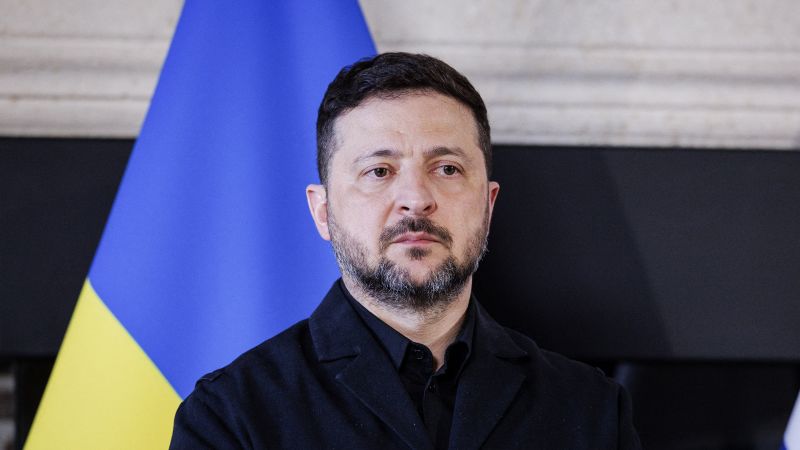
Ukrainian President Volodymyr Zelensky has returned the Order of the White Eagle, Poland's highest state honor, following a politically sensitive dispute regarding World War II history. This action comes after Polish President Karol Nawrocki revoked the award, which was originally bestowed upon Zelensky in 2023 for his contributions to security, resilience, and human rights.
In a social media post, Zelensky explained his decision, stating, "Ukrainians believed the order was meant for the Ukrainian People and our army. Today, I sent the Order back to the President of Poland. I believe the future will confirm the respect Ukrainians deserve." His post included photographs of the honor and a postal receipt indicating it was being returned to the Polish presidential office.
The controversy stems from Zelensky's May 26 decree, which designated a unit of Ukraine's Special Operations Forces after the Ukrainian Insurgent Army (UPA). This group, active during the 1940s and 1950s, has been accused of committing mass killings against Poles during World War II. Nawrocki, in a 13-minute address on social media, stated, "For the majority of Polish society, the Ukrainian Insurgent Army remains above all a formation responsible for cruel crimes against the citizens of the Polish Republic during World War II."
Zelensky's decree has reopened historical wounds, drawing significant criticism in Poland, a country that has taken in millions of Ukrainian refugees and has been a key ally of Ukraine amid Russia's ongoing invasion. Despite this, Nawrocki, a nationalist politician, has been seen as capitalizing on anti-Ukrainian sentiments for political advantage, leading to increased prejudice against Ukrainians in Poland, even as they contribute to the Polish economy.
Nawrocki assured that the revocation of Zelensky's honor would not affect Poland's support for Ukraine in its defense against Russia. In his response, Zelensky expressed gratitude for Poland's assistance and reiterated a willingness to resolve historical disputes. He stated, "I am proud of our people and of EVERY Ukrainian warrior."
Kyrylo Budanov, chief of the Ukrainian Presidential Office, criticized Nawrocki’s decision, labeling it "an unfriendly act toward our people" and suggesting it could be exploited by Russia against both Ukraine and Poland. Following this, four Ukrainian officials, including Budanov, indicated they would return state honors awarded by Poland.
Some voices within Ukraine expressed disapproval of the decision to return the Polish honors. Former Prime Minister Arseniy Yatsenyuk remarked on X that one "harmful and incorrect decision by the current president of Poland cannot be corrected by other incorrect decisions of ours."
Poland is set to host a significant event next week focused on Ukraine's postwar reconstruction, which Zelensky was anticipated to attend. Polish Prime Minister Donald Tusk, a rival of Nawrocki, called for both leaders to reduce tensions, stating, "The front line runs elsewhere" and noting that the dispute between Poland and Ukraine "delights Putin and shocks our allies."
Zelensky's May decree aimed to restore military traditions and acknowledge the UPA's role in defending Ukraine's territorial integrity and independence. The UPA fought for Ukrainian independence against both Nazi Germany and Soviet forces but has been accused of atrocities against Polish civilians, particularly in Volhynia and Eastern Galicia. In 2016, the Polish Parliament declared the actions of the UPA as genocide.
Both Polish and Ukrainian armed groups have been implicated in attacks and reprisals that resulted in significant civilian casualties during the war. Recently, the two nations had seen some progress in addressing the exhumation of Polish victims, with a meeting in December between the two presidents indicating steps towards historical reconciliation.