Democratic socialists have gained significant ground in cities like New York and Washington, DC, prompting questions about their potential to expand beyond urban areas.
Democratic socialists are making notable strides in New York and other cities across the United States, raising questions about their potential to win in different regions.
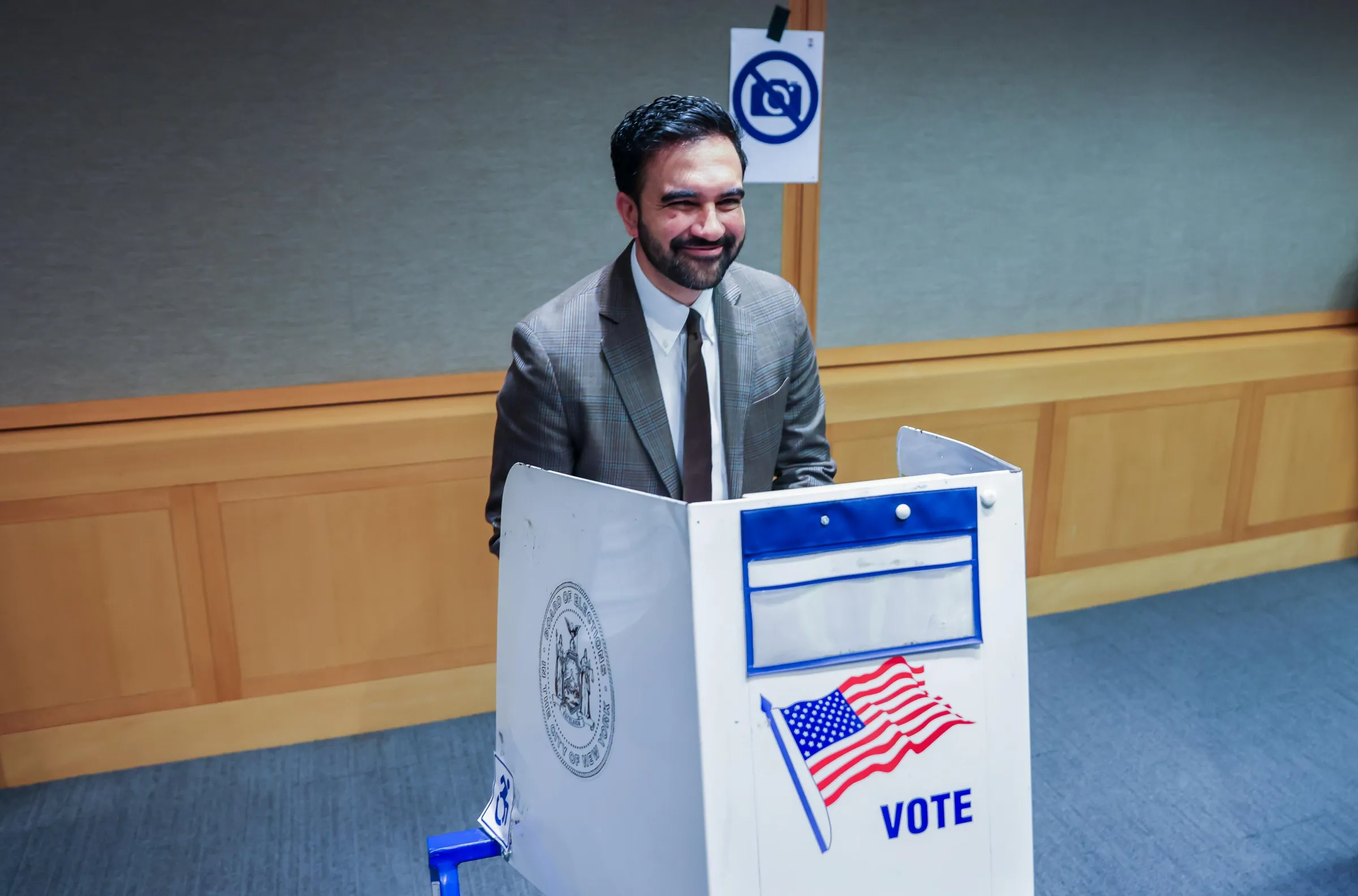
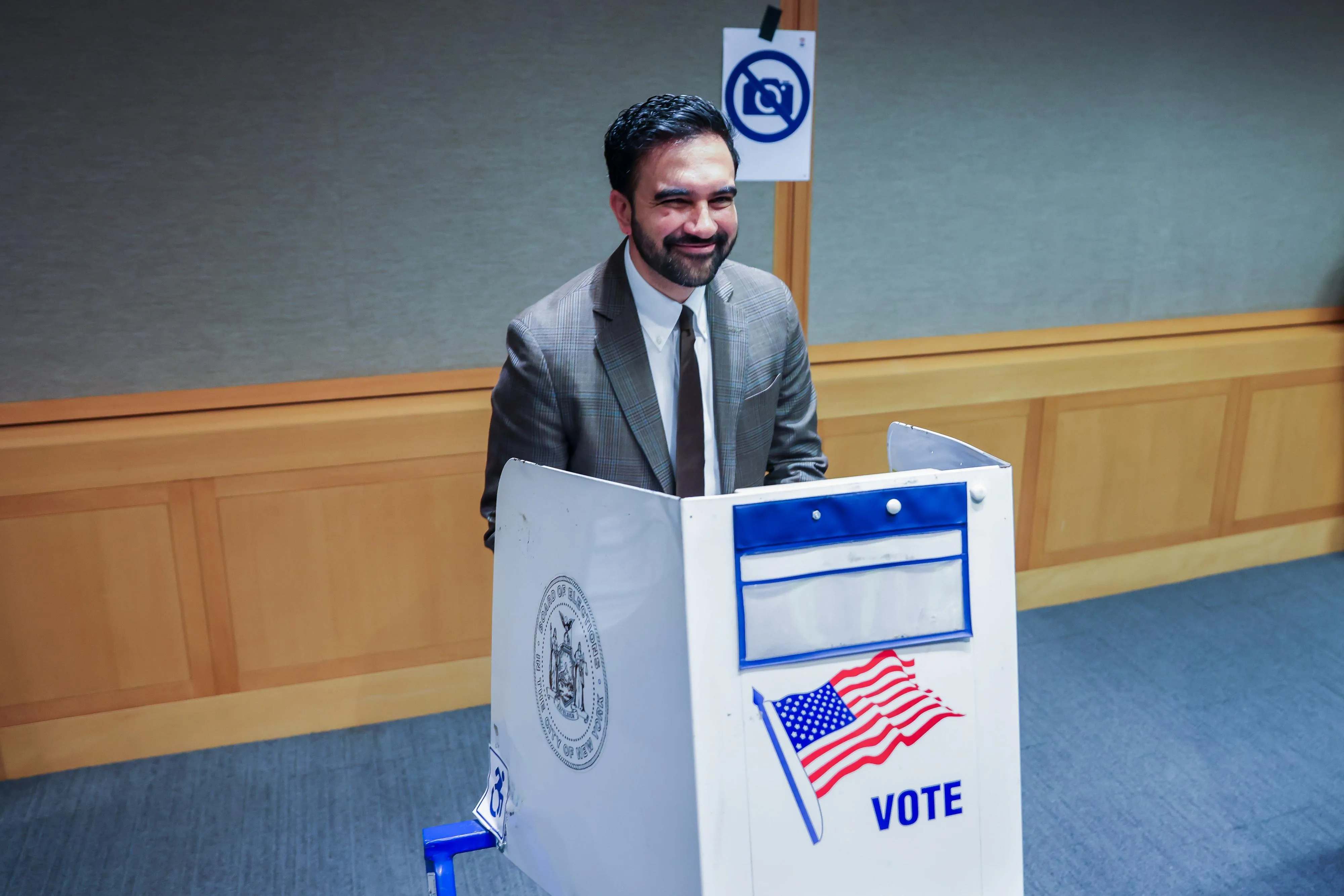
During the recent primaries in New York, candidates affiliated with the Democratic Socialists of America (DSA) achieved significant victories, defeating candidates backed by the Democratic establishment in congressional primaries and succeeding in several state legislative races.
These results indicate that the election of DSA member Zohran Mamdani as mayor of New York City last year was not an isolated incident, but rather a sign that democratic socialism is gaining traction in urban areas across the country.
In Washington, DC, DSA member Janeese Lewis George secured a decisive victory in the Democratic mayoral primary last week, positioning her as the likely next mayor of the district.
Seattle's Mayor Katie Wilson, who won against incumbent Bruce Harrell last year, identifies as a democratic socialist. Meanwhile, in Los Angeles, city council member Nithya Raman, also a DSA member, advanced to a runoff against Mayor Karen Bass scheduled for November.
The DSA has successfully elected representatives to city councils in numerous cities, including New York, Los Angeles, Minneapolis, Chicago, Portland (Oregon), and San Antonio, as well as a few state legislators across various states, primarily from urban districts.
However, extending their influence beyond deep-blue urban centers—into suburban and rural areas, or statewide contests—remains a considerable challenge.
This was evident in New York, where establishment-backed Democrats easily defeated left challengers in the state comptroller race and in a competitive GOP-held House district. The DSA chose not to endorse candidates in either contest, likely due to perceived low chances of success. Additionally, Mamdani's statewide favorability ratings are not particularly strong, despite New York being a predominantly blue state.
Several factors contribute to the DSA's increasing popularity in major cities, and understanding these reasons may provide insights into whether their movement can gain traction in other regions as well.
Historically, cities have overwhelmingly leaned Democratic. However, the rise of democratic socialism has emerged more recently, gradually developing over the past decade and gaining momentum in the last year.
This shift often followed a pattern where an aging Democratic establishment, which had been in power for an extended period, became disconnected from the concerns of its increasingly left-leaning base.
Asad Dandia, a public historian from Brooklyn, noted, 'The Democratic Party apparatus that has traditionally been responsible for providing goods and services and representation to the people has atrophied.'
As the traditional party structures began to appear hollow, the DSA stepped in to fill the void through grassroots organizing, achieving notable success in New York.
According to pollster Adam Carlson, 'The NYC DSA is the crown jewel of all the DSA networks around the country,' emphasizing the importance of community engagement and outreach in their approach.
The DSA's successes in the late 2010s, including the election of Representative Alexandria Ocasio-Cortez (D-NY) to Congress, set the stage for a revival during the Biden administration years, which saw a disillusionment with the Democratic establishment.
A series of political changes, including the Israel-Gaza conflict becoming a moral litmus test for many left-leaning voters and the Democratic establishment's inability to prevent Donald Trump's return to power, fueled a desire for change among constituents.
This was compounded by economic pressures, such as rising costs of living in the post-Covid economy, which particularly affected millennials and Gen Z individuals residing in expensive urban areas. Many began to perceive the party establishment as a representation of the status quo.
Dandia explained that the DSA largely consists of younger individuals in their 20s and 30s, many of whom are college-educated renters. He stated, 'We don’t have access to the resources and the wealth and the necessities for us to achieve the American dream.'
In response to these challenges, democratic socialists have introduced younger, progressive candidates who resonate with voters' dissatisfaction towards both local and national Democratic establishments, promising new solutions while the traditional establishment defends the status quo.
Jordan Weissmann from the Progressive Policy Institute remarked on the energized left activist network that effectively mobilizes grassroots support, contrasting it with the lack of a coherent counterbalance from the moderate side of the political spectrum.
Democratic socialists have secured significant positions in big-city mayoralties and city councils, and they will have several representatives in Congress. However, replicating this success in other areas presents a more complex challenge.
Megan Romer, co-chair of the DSA, acknowledged that their electoral victories predominantly reflect blue cities and blue states, stating, 'We’re not blind to this. It is something that is being worked on.'
Suburbs and rural areas generally lean less Democratic, and even the Democrats in these regions tend to be older and less progressive. Issues such as homeownership are more relevant in these demographics, with homeowners often less inclined to support radical change. Carlson noted, 'Homeowners don’t want to rock the boat as much.'
Romer highlighted that discussions around housing justice and policy primarily resonate with urban dwellers, suggesting that the DSA needs to explore policies that appeal to suburban and rural constituents, mentioning opposition to data centers as one potential avenue.
Carlson also pointed out the logistical challenges of organizing in less densely populated areas, emphasizing that while it is not impossible, the absence of a national unifying force, such as a presidential campaign or compelling statewide initiative, complicates matters.
Even within urban environments, questions remain about how well socialists will perform in the long term as they transition from opposition to governance. They face the challenge of effectively addressing the cost of living crisis and demonstrating their ability to manage essential services during crises, such as snow removal during winter storms.
Mamdani recognizes that the broader leftist movement's future hinges on the effectiveness of his administration in New York City. He identifies as a 'sewer socialist,' a term used to describe early 20th-century socialists who prioritized competence in delivering basic services like sanitation and healthcare over more ideological pursuits. He has taken a pragmatic approach to governance, including retaining his predecessor's police chief.
While Mamdani's approach appears to be working for now, there are cautionary tales of other local governments that elected ambitious progressives but failed to meet expectations. Weissmann cited San Francisco as an example, where a left-leaning government lost power after moderates organized effectively and presented a coherent vision to address the city’s challenges.
Mayor Daniel Lurie of San Francisco has maintained high approval ratings since winning his election in 2024 by focusing on public safety and housing affordability initiatives.
Transitioning from being the 'change' faction that capitalizes on voter dissatisfaction to maintaining voter support while in power poses a significant challenge. If democratic socialists aim to extend their influence beyond urban areas, demonstrating effective governance in cities will likely be a crucial first step.
More in Politics

Insights from the Mueller Report on Russian Trolls' Social Media Manipulation in the 2016 Election
Minnesota Immigrant Community Faces Lingering Fear and Economic Impact After ICE Raids