Venezuela Signs Agreement with General Electric to Rebuild Electricity Grid
Venezuela's interim president has finalized a deal with General Electric to restore the country's electricity infrastructure, marking a shift towards U.S. investment amid ongoing economic challenges.
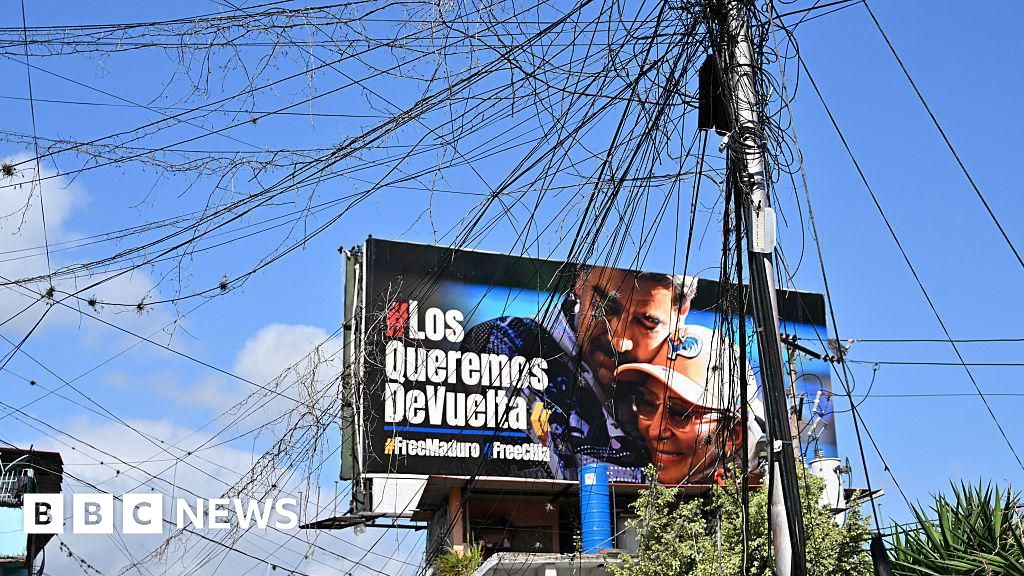
Venezuela's interim president, Delcy Rodríguez, has formalized an agreement with the American energy corporation General Electric aimed at rehabilitating the nation's electricity grid. The announcement was made during a televised event at the presidential palace on Monday, following Rodríguez's swearing-in shortly after U.S. forces ousted the nation's leader, Nicolás Maduro, in January.
This agreement signifies a notable shift in the interim government's approach, as Rodríguez, who previously criticized the U.S., is now welcoming American investors and companies into Venezuela's economy. However, critics caution that while there appears to be a relaxation of state control over economic matters, many key institutions remain under the influence of her political party.
Venezuela has been grappling with frequent power outages, and its electricity system, nationalized in 2007 under the leadership of Maduro's predecessor Hugo Chávez, is in urgent need of repairs and investment. The power cuts often extend for 10 hours or longer, significantly impacting major urban areas, including the capital city of Caracas.
Rodríguez characterized the deal with General Electric Vernova, the local branch of the U.S. company, as a "historic step for Venezuela," asserting that it would help restore what she referred to as an "essential service" for the country.
The Maduro administration has attributed the ongoing power outages to a drought that has limited electricity production from the Guri hydroelectric power dam, a primary source of energy for the nation. Nevertheless, analysts have consistently warned that inadequate investment and maintenance of the power grid, alongside high energy consumption, have precipitated an energy crisis that hampers Venezuela's economic recovery.
The arrangement with General Electric was established under Energy Minister Rolando Alcalá, an electrical engineer who was appointed to the position by Rodríguez three months prior. His appointment has been viewed as a positive development, especially after a six-year period during which the ministry was led by military officials who were unable to address the deteriorating grid.
Rodríguez has also been collaborating closely with the Trump administration on various issues. Recently, U.S. forces conducted a military operation that resulted in the death of the leader of the Tren de Aragua criminal organization. U.S. Secretary of Defense Pete Hegseth stated that the operation was executed "in full co-operation with Venezuelan security forces," a level of collaboration that would have been inconceivable during Maduro's tenure.
Despite these developments, members of Venezuela's opposition have expressed concerns regarding the limited changes in the legislative, executive, and judicial branches following Maduro's removal. They point out that the electoral council still largely favors Maduro's loyalists.
Two weeks ago, U.S. Secretary of State Marco Rubio addressed Congress, emphasizing that a "free and fair democratic election" is essential for Venezuela, not only as a moral imperative but also as a necessity for attracting the desired investment. However, he acknowledged that conditions must be created to facilitate such elections, including the establishment of free media and providing political parties with the opportunity to organize and prepare. Rubio noted that efforts to achieve these objectives are ongoing, yet he did not specify a timeline for when elections might take place.