The recently announced US-Iran memorandum opens the Strait of Hormuz and sets a 60-day timeline for negotiating a comprehensive nuclear agreement, yet many critical issues remain unresolved.
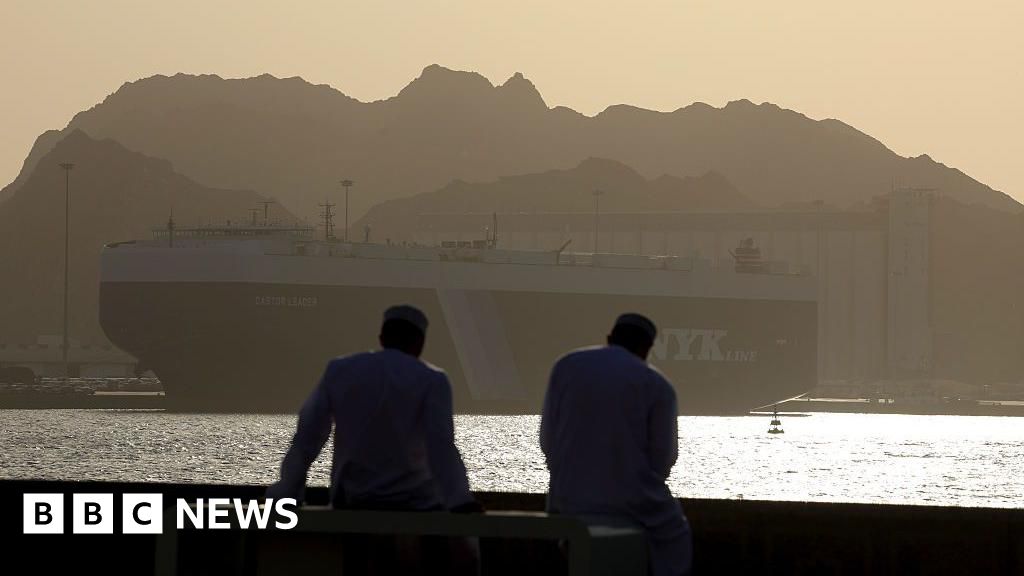
A memorandum of understanding between the United States and Iran, revealed on Wednesday, signifies a reopening of the Strait of Hormuz and aims to lay the groundwork for a final agreement on various pressing issues. This announcement was made during a press conference by President Donald Trump at the G7 summit held in France.
Both nations confirmed that the memorandum was electronically signed on Wednesday and is currently in effect. However, additional information provided by US officials during a conference call with reporters indicates that significant challenges remain before a comprehensive peace agreement can be achieved—particularly Trump's primary objective of preventing Iran from developing nuclear weapons.
Trump has asserted that the deal guarantees Iran will not be able to acquire, develop, or produce nuclear arms. Nonetheless, the details of the agreement, which were shared by officials during the call, reveal that it does not fully meet this goal.
The agreement primarily extends a ceasefire and initiates a critical 60-day period for negotiations aimed at reaching a lasting nuclear pact. The original Iran nuclear deal, negotiated by the Obama administration, took 20 months to finalize in 2015. The Trump administration faces the challenge of achieving a similar outcome in a significantly shorter timeframe.
Presently, the deal only obligates Iran to 'downblend' its stockpile of highly enriched uranium under the oversight of the International Atomic Energy Agency (IAEA). A senior US official characterized this commitment as a 'significant concession' from Iran.
The specifics regarding the technical implementation of this downblending process and the timeline for its completion still require negotiation during the upcoming 60-day period, which will commence following the signing scheduled for Friday.
Trump has emphasized that the US will not provide any financial aid to Iran, a critical stance for him that contrasts with the $1.7 billion payment made to Iran by the Obama administration in 2016. As Trump seeks to establish his legacy, he aims to portray his approach to Iran as superior to that of his predecessor, using the financial aspect to argue for a stronger position against Tehran.
According to the language in the agreement, the US intends to collaborate with regional partners to formulate a mutually agreed plan for Iran's reconstruction, which could involve at least $300 billion. However, a senior US official clarified that the deal does not bind the US to disbursing any funds to Iran. The wording of the agreement is somewhat ambiguous, potentially allowing for future payments to Iran as part of a negotiated settlement stemming from the ongoing conflict.
This ambiguity could pose a significant political challenge for Trump and Vice-President JD Vance, who campaigned on the promise to avoid initiating new 'forever wars.' Their base, which is generally anti-interventionist, may oppose any arrangement that could involve payments to Iran, even if these do not come directly from US funds.
Several other important issues receive minimal attention in the brief deal. When the conflict began, Trump indicated that one of his top priorities was to halt Iran's funding of proxy groups in the region, such as Hezbollah. This concern was shared by Israel, which has been actively involved in the conflict and has engaged in separate hostilities with the Iranian-backed militia in Lebanon.
While the cessation of hostilities outlined in the initial agreement does extend to Hezbollah, the group is mentioned only sparingly, raising questions about whether Iran will be compelled to withdraw its support for Hezbollah and other regional proxies in subsequent negotiations.
Moreover, the agreement does not thoroughly address Iran's missile program, another issue that both Trump and Israeli Prime Minister Benjamin Netanyahu identified as a key priority at the conflict's outset.
The future of the deal signed in Geneva this week remains uncertain. Although the text establishes a 60-day deadline for negotiations, it also allows for an extension if deemed necessary, suggesting that both parties may not be overly optimistic about securing a more comprehensive agreement within the stipulated timeframe.
During his G7 press conference, Trump appeared to express uncertainty about the likelihood of achieving a lasting peace with Iran. He stated, 'If it doesn't get done in 60 days, it's all right. We go back to bombing.'