US Ceasefire Agreement with Iran Poses Political Challenges for Netanyahu
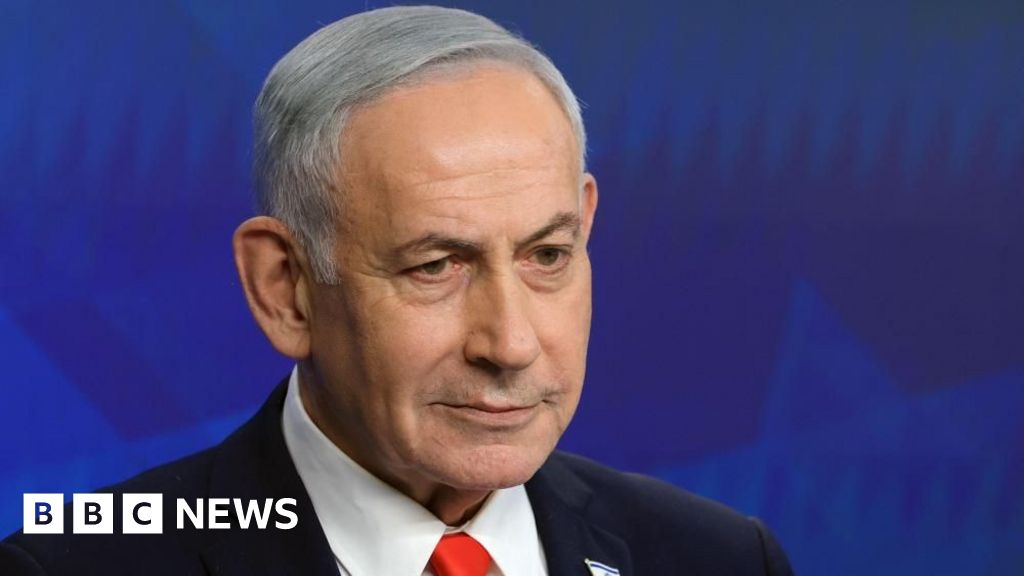
The US ceasefire deal with Iran has created a political dilemma for Israel's Prime Minister Benjamin Netanyahu, undermining his security narrative and leaving him with difficult choices ahead of elections.
The recent ceasefire agreement between the United States and Iran has placed Israeli Prime Minister Benjamin Netanyahu in a precarious political situation, challenging the foundational elements of his political career and creating new security concerns.
Netanyahu, who has historically positioned himself as a key influencer in Washington, faces questions about how he can be so sidelined by a key ally. The ceasefire has raised concerns about Iran's strengthened position in the region, especially regarding its influence over Hezbollah in Lebanon.
As the political landscape shifts, Netanyahu's image as Israel's "Mr. Security" is at risk, particularly with demands from both Washington and Tehran for Israel to halt its military actions against Hezbollah, coinciding with the upcoming Israeli general election.
The alternatives available to Netanyahu appear limited. Opposition leader Yair Lapid articulated this dilemma in the Knesset, stating that Netanyahu must choose between a damaging confrontation with the US or a submissive acceptance of a deal that compromises Israeli interests.
US President Donald Trump's harsh critique of Netanyahu's judgment following a recent military strike on Beirut has been leveraged by his political opponents, who are increasingly vocal as elections approach.
Pressure is also mounting from within Netanyahu's own Likud party and far-right coalition members. National Security Minister Itamar Ben-Gvir expressed on social media that Trump's agreement does not obligate Israel and emphasized the need for Israel to prioritize its own security.
Likud lawmaker Ariel Kallner affirmed that Israel would continue to protect itself, although he refrained from clarifying whether this meant continuing military operations.
Sima Shine, a former Mossad official and Iran expert, criticized the US for allowing Iran to dictate terms regarding Lebanon, warning that this may enable Iran to bolster its support for Hezbollah, which is a significant concern for both the Israeli security establishment and political leaders.
Amid the widespread criticism from various political factions, Netanyahu has remained notably silent. His usual tendency to proclaim victories has been absent, leading some to interpret his silence as a sign of the challenges he faces in determining his next course of action.
Netanyahu has long campaigned on a security-first agenda, a narrative that is becoming increasingly hard to maintain. Following the Hamas-led attacks on October 7, 2023, he shifted Israel's military strategy towards a more aggressive posture, aiming to pre-empt threats rather than simply contain them.
Despite Israel's extensive military operations in Gaza, which have resulted in significant casualties, including over 73,000 deaths according to the Hamas-run health ministry, Hamas continues to maintain control over a significant portion of the territory. Meanwhile, diplomatic efforts involving a US-brokered peace plan for Gaza remain stalled, eight months after a ceasefire agreement was reached.
Netanyahu's new security policies have resulted in Israeli forces occupying substantial areas of Gaza, Lebanon, and Syria. While this stance is supported by many Israelis, it is placing a strain on the military and its reservists, with no clear diplomatic solution in sight.
Continued conflicts with Hezbollah and Iran have failed to eliminate Israel's adversaries, leading to a more hardline Iranian leadership that feels emboldened, particularly concerning its leverage in the Strait of Hormuz.
The situation prompts a reevaluation of Israel's strategy towards Tehran. Danny Citrinowicz, a senior researcher at Israel's Institute for National Security Studies (INSS), suggests that Israel needs to adopt more realistic and restrained priorities in light of its current challenges.
Citrinowicz warns that any Israeli military action perceived as an attempt to sabotage the US-Iran agreement could provoke a severe response from the US, noting that Netanyahu's previous strategies of garnering support from Congress and public opinion are now much less viable.
Netanyahu's longstanding narrative has relied on the notion that his policies offer the best defense against regional threats; however, this narrative is increasingly overshadowed by unfolding events. A potential regime change in Iran might have bolstered his political standing, but his current security strategy has left him facing the choice of either confrontation or capitulation, not with an enemy, but with a crucial ally.