Trump's Proposal for Syrian Intervention in Lebanon Raises Concerns
US President Donald Trump proposed that Israel allow Syria to address Hezbollah, a suggestion that stirs fears in Lebanon due to Syria's historical involvement and implications for sectarian balance.
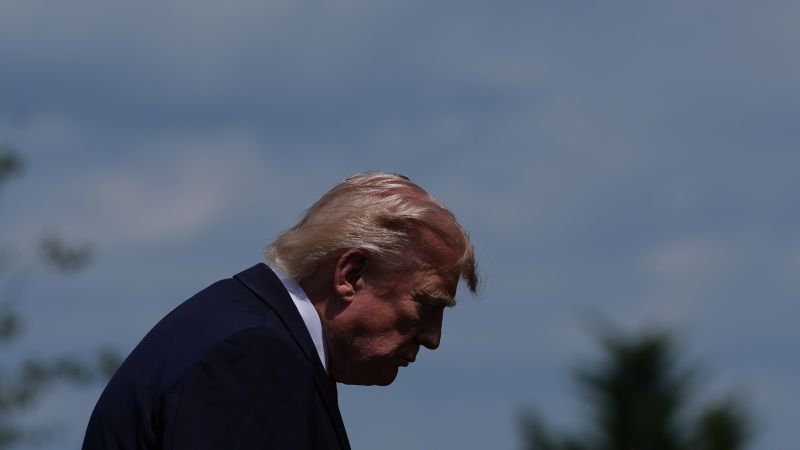
On a recent Tuesday, US President Donald Trump proposed that Israel permit Syria to take action against Hezbollah, suggesting that the Syrian government would be more effective in dealing with the militant group. This proposal, which Trump has mentioned twice within the month, raises significant concerns in Lebanon due to the country's complex history with Syrian interference and the jihadist background of its current leadership.
The specifics of Trump's suggestion remain ambiguous. It is unclear whether he envisions the deployment of Syrian troops into southern Lebanon or if he is advocating for Syrian forces to disrupt Hezbollah's supply routes by force. Regardless of the interpretation, either scenario is likely to instill fear among the Lebanese populace.
For nearly three decades, Syria exercised considerable influence over Lebanon's political landscape. Syrian military forces first entered Lebanon in 1976 during the civil war, ostensibly as peacekeepers. However, they maintained a prolonged military presence long after the conflict ended, which many Lebanese perceive as an occupation. This era was characterized by numerous disappearances and deaths, fostering deep-seated distrust and complex sentiments towards Syria among the Lebanese.
The Iran-aligned Shiite militant group Hezbollah played a significant role in supporting former Syrian President Bashar al-Assad during the Syrian civil war. This support was crucial for maintaining an arms supply route connecting Hezbollah to Iran and Iraq, and facilitated Assad's grip on power. The alliance between Hezbollah and Assad was rooted in mutual animosity towards Israel and a shared alliance with Iran, but this arrangement shifted following Assad's fall in 2024 and the ascension of President Ahmad al-Sharaa, a former al-Qaeda jihadist who has since expelled Iran-backed factions and pursued a more Western-aligned policy.
In a response to speculation about Syrian intervention in Lebanon, President Ahmad al-Sharaa dismissed the reports as entirely false. However, the prospect of renewed Syrian involvement in Lebanon could exacerbate the delicate sectarian balance that underpins the country's political system. Given the historical animosity of the Syrian leadership towards Shiites—who represent a significant portion of Lebanon's population—such an intervention could provoke widespread dissent.
Michael Young, a Lebanon expert and senior editor at the Carnegie Middle East Center, criticized Trump's suggestion, labeling it a "completely absurd idea." He highlighted the risks associated with the sectarian implications of Syrian intervention, warning that it could lead to a divided Lebanon and a disastrous outcome. Young expressed that al-Sharaa would be making a grave mistake if he pursued this course of action.
The potential for Syrian troops to enter Lebanon raises alarm, particularly as many soldiers may come from Islamist factions with a history of committing atrocities against minorities within Syria. Lebanon is a multi-sectarian nation, home to various ethnic and religious groups, including one of the largest Christian communities in the region. Some religious factions that oppose Hezbollah's presence may nonetheless prefer the status quo over the prospect of Syrian military forces entering the country, according to Young.
Young further warned about the possibility of a Syrian army influenced by Salafist factions entering Lebanon, which would likely instill fear among Christians, Druze, and Shia communities. He noted that such a development could inadvertently strengthen Hezbollah rather than weaken it.
The stability of al-Sharaa's regime in Syria, especially regarding control over the military, remains uncertain, which could exacerbate the consequences of any military intervention. Syria's involvement in addressing Hezbollah's role in Lebanon could also drag the country back into a regional conflict from which it has been trying to extricate itself. The Lebanese government has been working to reclaim its security authority in the face of Hezbollah's overwhelming military capabilities.
Lebanon's sovereignty is under considerable strain, particularly with Israel's continued military presence in the southern part of the country. A senior US official informed CNN that the emerging ceasefire agreement between the Trump administration and Iran does not compel Israel to withdraw its forces from Lebanon. Trump has expressed frustration with Israeli Prime Minister Benjamin Netanyahu, stating that he needs to be "more responsible with respect to Lebanon."
Tensions between Trump and Netanyahu have surfaced multiple times in recent months, with Trump believing that the Israeli leader's actions have complicated US efforts to negotiate a deal with Iran due to ongoing attacks on Hezbollah in Lebanon. In a news conference on Monday, Netanyahu publicly addressed the US-Iran framework for the first time, acknowledging that he and Trump do not always agree. He affirmed his responsibility for Israel's security, emphasizing that it needs to be approached wisely. Netanyahu also clarified that Israel does not plan to withdraw from southern Lebanon, Gaza, or Syria to ensure the defense of its nation.
In a strong condemnation of Trump's proposal, Israeli National Security Minister Itamar Ben Gvir stated, "The idea of entrusting our security into the hands of ISIS terrorists, beheaders and murderers of young girls will not happen."