

India's restriction on Telegram due to exam fraud concerns has resulted in a significant increase in VPN downloads and alternative messaging app usage, according to data from Appfigures and other sources.
India recently imposed a week-long ban on the messaging application Telegram, citing concerns over fraud related to national examinations. In response, users have turned to virtual private networks (VPNs) and alternative messaging apps in unprecedented numbers.
Data from app intelligence firm Appfigures revealed that the day India announced the restriction, June 16, saw the highest number of VPN app downloads in the country since at least the beginning of 2025. The downloads surged by 49%, increasing from a recent daily average of 139,000 to 208,000.
Among the VPNs, Proton VPN and Turbo VPN experienced some of the most significant increases. Downloads of Proton VPN on Apple’s App Store jumped by 113%, while Turbo VPN saw an 85% rise. On Google Play, Proton VPN’s downloads increased by 64%, and Turbo VPN's grew by 35%. Other notable increases included NordVPN, which saw a 41% rise in App Store downloads, and ExpressVPN, which experienced a 31% increase on Google Play.
Following the announcement of the Telegram restriction, Proton VPN's ranking on the Apple App Store shot up from 18th to 5th place in the Utilities category, while its Google Play ranking soared from 8th to 2nd in the Tools category, according to Appfigures.
The Indian government decided to restrict Telegram until June 22 due to concerns that fraudsters were exploiting the platform to deceive candidates ahead of the National Eligibility cum Entrance Test (NEET), which is the country’s largest entrance examination by the number of applicants. Officials stated that the ban was necessary to curb the circulation of counterfeit exam papers and related scams. Telegram has since challenged this order in the Delhi High Court, arguing that the authorities should focus on specific content rather than imposing a blanket ban on the platform. However, the court upheld the restriction on June 16.
The impact of the ban extended beyond download statistics. Proton reported that daily registrations from India surged by 120% above normal levels on June 17, following an initial spike of 150% in hourly registrations on the evening of June 16. The company noted that this increase was particularly striking given its established user base in India.
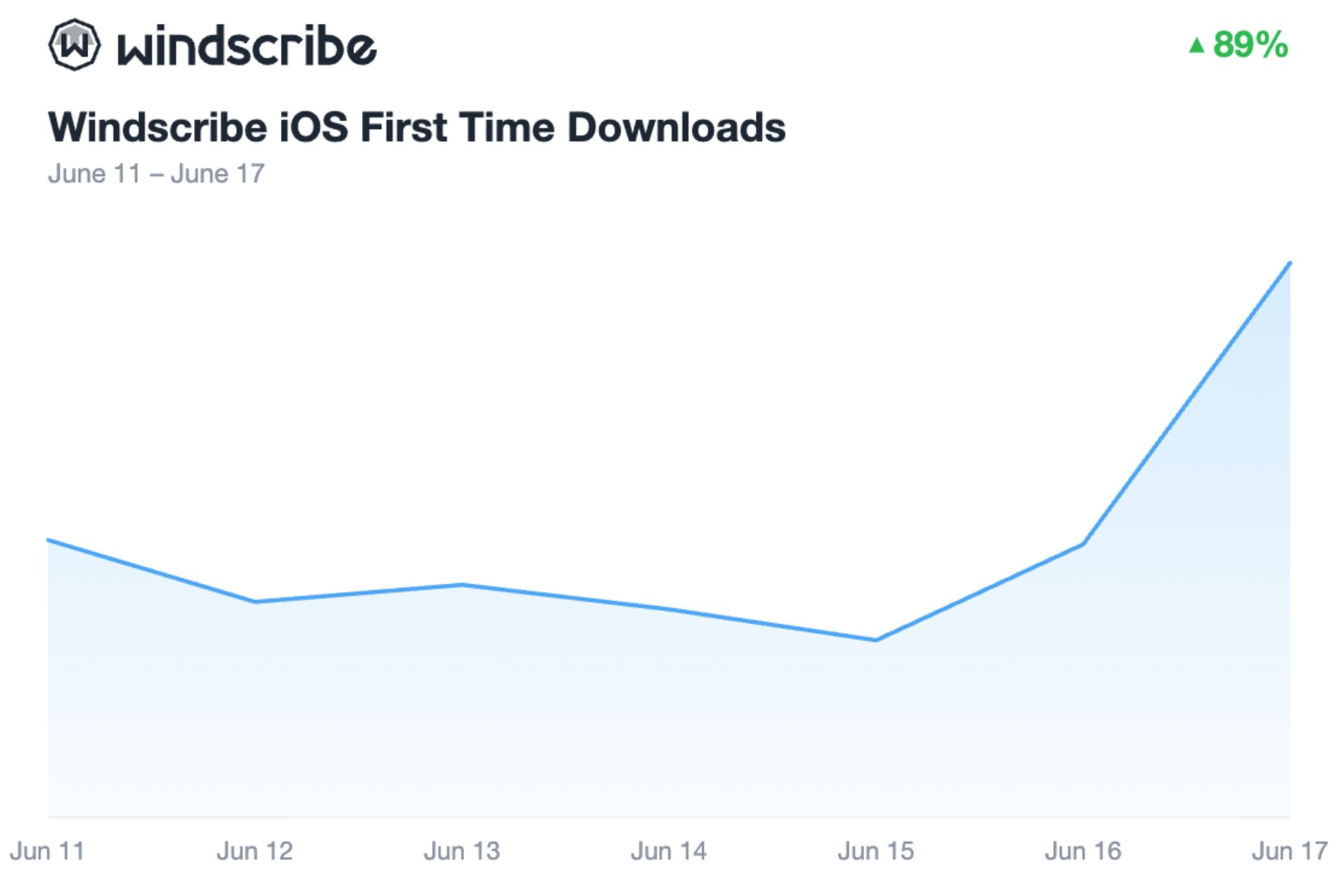
Windscribe, a Canadian VPN service provider, also reported a significant uptick in activity, with signups from India peaking about 100% above baseline levels. The first-time downloads of its iOS app in India rose by approximately 89%.
Rebecca Rosenberg, the growth operations manager at Windscribe, commented that the surge in demand for VPNs in India reflects a common trend seen in regions where specific apps face bans or when age verification requirements are introduced.
Surfshark reported a 30% increase in connectivity from India since the Telegram restriction was announced, indicating a broader trend in VPN usage in response to app bans.
The increase in VPN demand was not limited to a few providers. Sensor Tower disclosed that downloads across the VPN app category in India rose by 10% day-over-day on June 17, reversing a prior decline that had persisted over the previous two weeks.
Laura Tyrylyte, a privacy advocate at NordVPN, stated that spikes in VPN demand typically follow any form of platform restriction. She emphasized that users tend to seek alternatives quickly when access to a necessary tool is suddenly revoked, suggesting a growing familiarity with circumvention tools among users.
In addition to VPNs, users began exploring alternatives to Telegram. Appfigures reported that downloads of Signal in India increased by 72% on the Apple App Store and by 322% on Google Play following the ban, while Viber's App Store downloads surged by 216%. Telegram-related messaging app iMe also experienced a dramatic rise, with its Google Play downloads jumping from an average of about 827 to 50,900 on June 16.
Interestingly, the restriction did not lead to an immediate decline in Telegram's usage. Sensor Tower noted that Telegram's daily active users in India increased by 17% on the day the ban was announced, marking the app's largest day-over-day growth since a significant outage of Meta’s services in 2021.
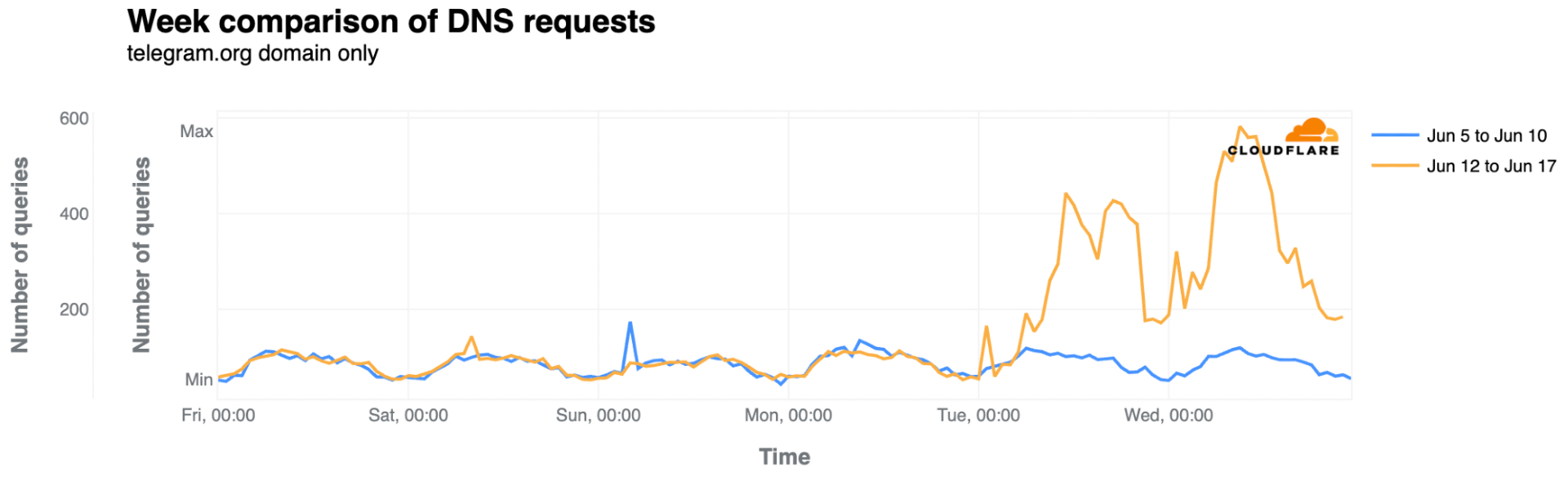
Other data points suggest that users were making efforts to access Telegram despite the ban. Cloudflare Radar Lead Lai Yi Ohlsen indicated that DNS requests for Telegram domains in India spiked sharply in the two days following the announcement. However, she cautioned that increased DNS traffic does not necessarily indicate successful access to the platform, as it could reflect repeated attempts to reach Telegram after the restriction was enforced.
Telegram pointed out its cooperation with authorities during the Delhi High Court hearings, stating that it had removed channels identified by the government. The company's legal representatives questioned the necessity of a platform-wide restriction that affects over 150 million users in India.
Government lawyers defended the temporary ban as a measure linked to the NEET re-test, with Solicitor General Tushar Mehta asserting that a permanent ban could raise proportionality concerns. He argued that the current restriction had a logical connection to the objectives it sought to achieve.
On June 16, the court ruled that the authorities had adhered to the prescribed procedures given the emergency nature of the order.
According to Surfshark’s Internet Shutdown Tracker, Telegram is currently blocked in 13 countries and has faced disruptions in at least 40 others over the years. Historical data indicates that such restrictions often lead to an increase in demand for circumvention tools. For instance, Sensor Tower reported that VPN downloads in the U.S. rose over 40% week-over-week when TikTok was briefly removed from U.S. app stores in 2025. Windscribe noted similar patterns following restrictions in countries including Iran and Russia.