Sen. Brian Schatz Prepares for Potential Leadership Role, Outlines Strategy Against Trump
Sen. Brian Schatz discusses his approach to confronting President Trump if the Democrats regain control of the Senate, emphasizing key issues like healthcare and tariffs.
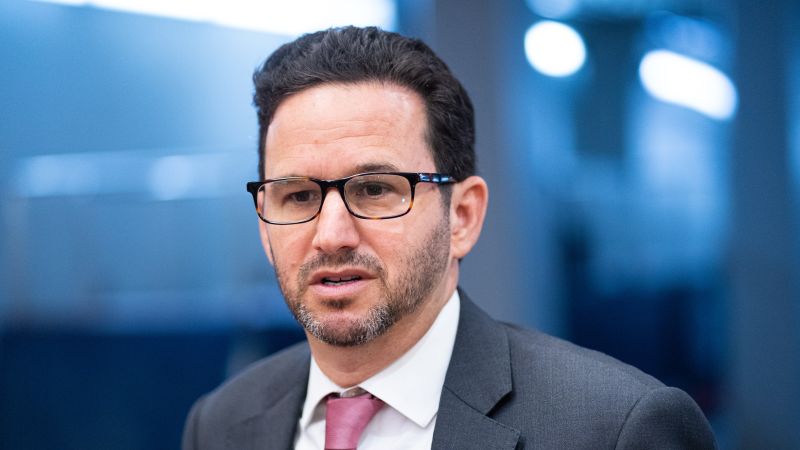
Senator Brian Schatz of Hawaii, who is anticipated to assume the No. 2 position in the Democratic caucus next year, has articulated a proactive strategy for addressing President Donald Trump should the Democrats secure a majority in the Senate come January.
Schatz identified healthcare, tariffs, and the need to limit what he describes as 'foreign policy adventurism' as crucial areas where a Democratic-led Senate could effectively counter the Trump administration's policies.
While he believes that Trump has committed numerous impeachable offenses, Schatz considers the topic of impeachment to be an 'important tactical question' rather than a straightforward decision.
In a recent interview on CNN’s 'Inside Politics Sunday,' Schatz warned Trump that if the Democrats achieve their electoral goals in the upcoming fall elections, the dynamic in Washington could shift significantly. He noted that nominees put forth by Trump would face a much higher threshold for approval, remarking, 'The quality of the nominees would immediately have to go up.'
He specifically mentioned controversial figures from the Trump administration, such as Bill Pulte and RFK Jr., as examples of individuals unlikely to gain Senate approval under a Democratic majority.
Democrats, buoyed by Trump's declining approval ratings, are optimistic about regaining control of both chambers of Congress and are preparing for a new leadership landscape in Washington. Schatz, who is currently part of the Senate Democratic leadership, is viewed as the likely successor to retiring Senator Dick Durbin as Democratic whip.
In his interview, Schatz emphasized the importance of finding common ground with the opposition while also standing firm on core American values, stating, 'When it comes to our core values, core American values, it’s going to be a fight.' This fight may involve contentious issues such as confirming a potential fourth Trump appointee to the Supreme Court or addressing calls from some Democrats to impeach the president for a third time.
Schatz acknowledged that while certain nominees during Trump’s first term received minimal Democratic support, the bar for future nominations could be raised significantly if Trump gets another opportunity to appoint a Supreme Court justice. He pledged that Democrats would take their constitutional role of 'advice and consent' seriously, asserting, 'I don’t think they’d be able to ram anybody through.'
Regarding impeachment, Schatz noted that a Democratic-controlled House, likely led by now-Minority Leader Hakeem Jeffries, would face decisions about whether to pursue impeachment against Cabinet secretaries or Trump himself, particularly as the next presidential campaign cycle gains momentum. He remarked, 'If they moved an impeachment to the Senate, I think it’s very likely predictable how everyone would vote. But for that very reason, I think they should measure twice and cut once.'
Schatz believes that winning elections will require more than just a combative approach; he advocates for what he calls 'an affirmative vision for America.' He sees opportunities in areas like healthcare and tariffs, as well as in addressing military interventions abroad, particularly with respect to Iran. He criticized the lack of public support for the war, saying, 'The reason that the public is not behind this war is they never bothered to make the case for it.' He suggested that Democrats should seek a congressional vote to authorize military force in such situations.
Reflecting on the political landscape, Schatz does not believe that Americans are seeking a return to the pre-Trump status quo, despite increasing wariness toward the former president. He stated, 'First of all, that’s probably not even possible, mechanically speaking, but second of all, that’s not actually what people want.'
He pointed out that Democrats face significant challenges due to unfavorable ratings, which he attributes to a perception that the party is disconnected from the economic struggles of everyday Americans. 'Prices were too high, and we had an 80-year-old president,' he explained, adding that these factors have contributed to a shift in political sentiment. 'We’ve got a lot of work to do in terms of recovering the trust that we once had, especially with working-class voters.'
Schatz argues that while ambitious election-year agendas are often overrated, the party should focus on strong positions on issues like healthcare and cost reductions as they navigate a potentially tumultuous 2028 presidential primary cycle. 'Lots of people will have lots of proposals, but I’m not particularly interested at this stage in settling all those questions before November,' he stated.
Although he is seen as a potential successor to now-Minority Leader Chuck Schumer, Schatz refrained from discussing such aspirations, calling it 'obnoxious' to publicly speculate about leadership ambitions. He expressed confidence in Schumer's leadership despite calls from some Democrats, particularly younger candidates, for generational change within the party. 'Look, candidates are going to do whatever they need to do to win, but it is very common... to be critical of the people in power,' he noted.
Schatz acknowledged that a shift is already underway within the party, with more than half of the recent Senate Democratic freshmen being in their 40s and 50s. However, he emphasized that the desire for fresh energy within the party relates more to ideology than age. 'What I think people are looking for is vigor and a sort of new way of doing things. I don’t think they’re always looking at the question chronologically,' he explained.
He clarified that inspiring the party with new ideas does not necessarily mean a sweeping leftward shift. Schatz remarked, 'The beauty of a winning political coalition is, at some level, it doesn’t always make sense.' He referred to Trump's coalition as 'contradictory,' encompassing a range of views from traditional conservatives to anti-interventionist factions, as a model for building a successful political alliance.
As he prepares for a potential leadership role, Schatz recognizes the challenge of aligning diverse Democratic perspectives, including those of Senators like John Fetterman and Graham Platner, who represent different ideologies and face their own controversies. He believes that 'talking, talking, talking' will be key to bridging these gaps, stating, 'There’s an old saying in Hawaii that everything in Hawaii is political except politics, which is personal.' He concluded, 'Politics at this level is about relationships.'