
Mukesh Ambani's Reliance Industries is launching AI services for calls, apps, and homes, aiming to establish a domestic AI ecosystem amid global competition.
As India seeks to establish its presence in the global artificial intelligence sector, billionaire Mukesh Ambani is positioning Reliance Industries as a leader in the field by introducing a range of AI services that will enhance phone calls, mobile applications, and smart home technology.
During its annual shareholder meeting held on Friday, the conglomerate based in Mumbai revealed the Jio Call Agent, an AI assistant designed to participate in phone calls. This assistant is capable of transcribing conversations, creating summaries, and performing various tasks like booking cabs, ordering food, and making reservations. Users can activate this service by saying 'Hey Jio,' and it is expected to be available later in the year for Jio's extensive user base of over 500 million subscribers.
By integrating these services directly into its telecom network rather than providing them as separate applications, Jio aims to make AI assistance a fundamental feature of phone calls. This strategy could diminish users' dependence on third-party call-assistant applications and provide Reliance with a significant competitive advantage in the rapidly evolving AI landscape.
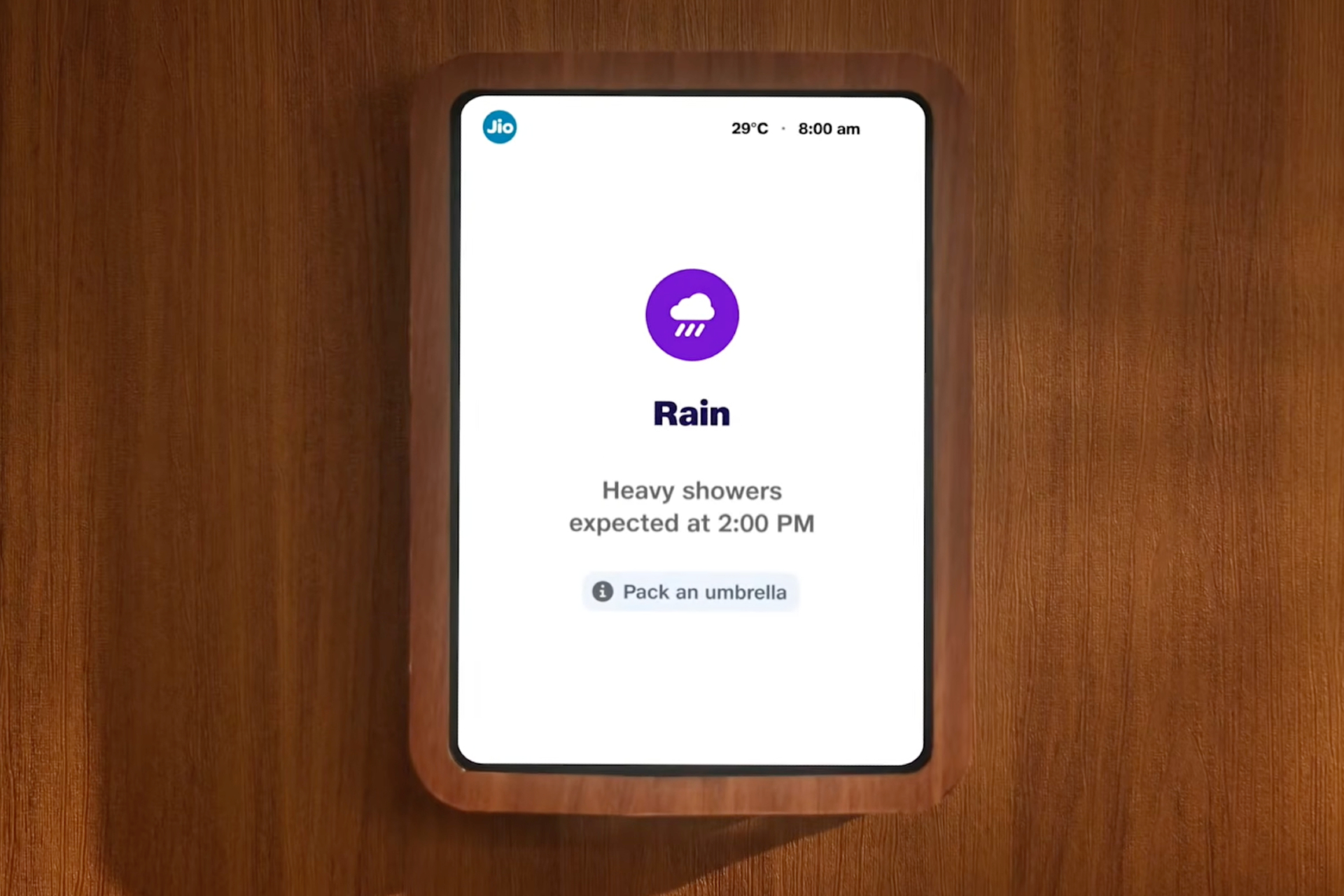
Additionally, Reliance introduced an AI-enhanced version of its MyJio app, which is capable of executing tasks for users based on natural language commands. This includes activating eSIMs and selecting roaming plans. The company also launched TeleFrame, an AI-driven home display that proactively provides information and suggestions, such as weather updates, schedules, and reminders. This product aligns with a broader industry trend towards ambient AI assistants for home use, a market also being explored by major companies like Amazon and Google.
These announcements signify a critical phase in Reliance's ambitions within the AI sector, particularly as India strives to develop its own capabilities in a field predominantly controlled by U.S. and Chinese tech firms. This initiative follows the establishment of Reliance Intelligence last year, which aims to create AI infrastructure and services for consumers, businesses, and governmental entities, including applications that support 22 languages spoken in India.
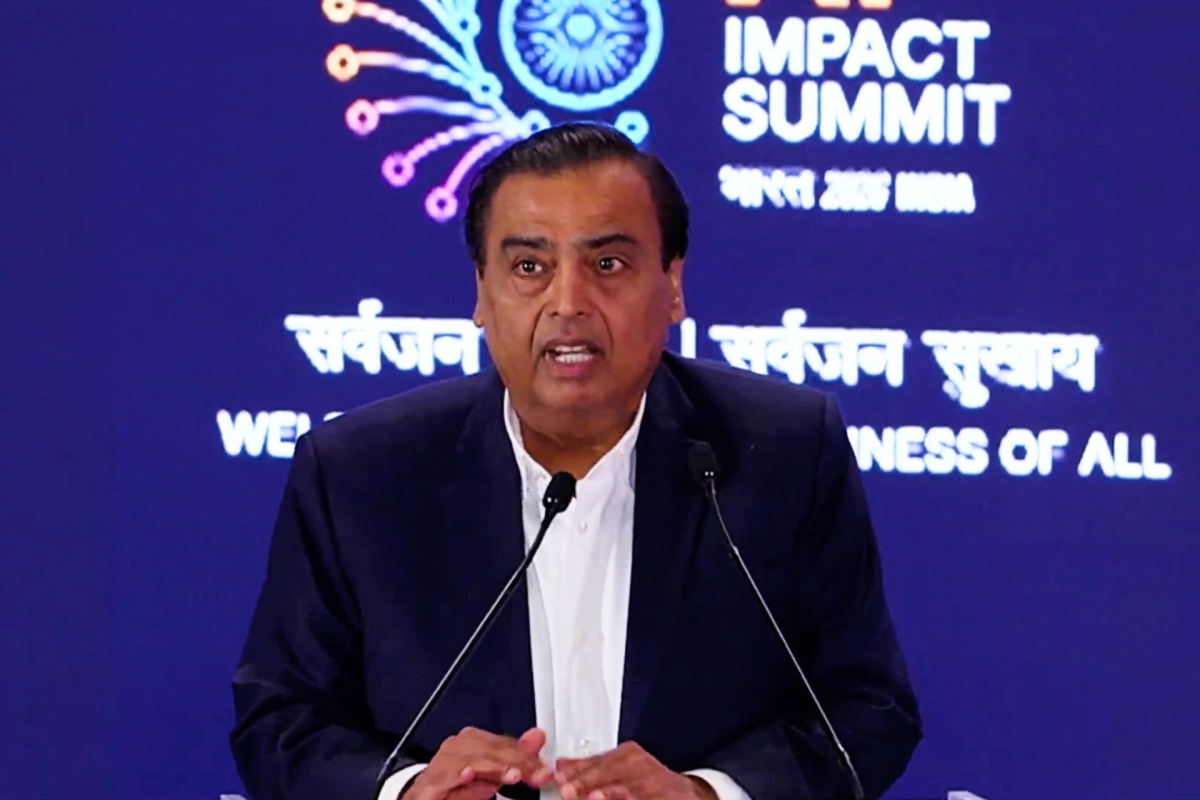
Ambani, 69, emphasized the importance of India becoming not just a consumer of foreign AI technologies but also a creator and global leader in the field. He stated, 'India should not be a mere consumer of AI created elsewhere. It must become a creator, adopter, and a global leader in AI.'
Reliance is expanding its AI initiatives through collaborations with major tech firms such as Google, Meta, and Nvidia. Earlier this year, the company announced plans to invest $110 billion in AI infrastructure, aiming to secure a prominent position in India’s developing AI ecosystem.
At the shareholder meeting, the company also presented an array of AI services tailored for various sectors, including healthcare, education, agriculture, and small businesses. These services, branded as JioHealthIQ, JioLearnIQ, JioKrishiIQ, and AI Vyapar, are designed to function in multiple Indian languages and address local demands.
A significant update for investors was also shared during the meeting, as Ambani mentioned that the board of Jio Platforms had approved a draft prospectus for an initial public offering (IPO), which will include a fresh issue of up to 270 million shares, as reported in a stock exchange filing.
The rollout of these AI services raises important questions regarding how Reliance will manage user data as it expands its offerings across phone calls, applications, and smart home devices. Although the company indicated that these services would operate with user consent, it did not clarify whether the data generated could be utilized for training AI models or shared with technology partners.
Reliance's push into AI comes at a time when Indian companies heavily depend on foreign AI models and cloud services. Recent restrictions on access to some of Anthropic's latest models have highlighted this reliance, illustrating how international decisions can impact Indian startups and businesses developing AI products. This dependency is prompting Indian conglomerates to build their own technological infrastructure instead of relying on external solutions.
Last week, Reliance announced a partnership with Meta to set up an AI data center in Gujarat, further building on Meta's previous investment in Jio Platforms and a joint venture initiated last year to develop AI solutions for both domestic and international enterprise customers.
Reliance is not the only company pursuing opportunities in the AI sector; Tata Consultancy Services, Infosys, and rival Adani Group are also expanding their AI initiatives and forming partnerships with global firms, including Anthropic, Google, and OpenAI, as India's largest corporations compete to secure a leading role in the country's AI future.
For Reliance, the stakes are particularly high as it prepares for Jio's long-anticipated stock market debut and looks for new growth avenues, especially given that the conglomerate's shares have declined by approximately 17% this year.