Lebanon Reports 18 Killed in Israeli Strikes as Tensions Escalate with Hezbollah
In southern Lebanon, 18 fatalities have been reported following Israeli air strikes, while Israel claims four soldiers were killed by Hezbollah amidst ongoing military confrontations.
According to Lebanon's health ministry, a series of Israeli air strikes in southern Lebanon resulted in at least 18 deaths. The Israeli military, meanwhile, reported that four of its soldiers were killed during clashes with Hezbollah.
The Israel Defense Forces (IDF) indicated that they targeted 80 locations associated with Hezbollah, an armed group backed by Iran, claiming to have killed 'dozens' of its members.
This escalation comes just a day after a deal was signed between the United States and Iran, intended to bring an end to hostilities in the Middle East, including a permanent halt to conflicts in Lebanon.
Despite the agreement, both Israel and Hezbollah have engaged in military actions against each other since it was announced, raising concerns about the viability of the truce established between the US and Iran.
The US-Iran agreement emphasizes the need to respect Lebanon's territorial integrity and sovereignty while calling for a cessation of hostilities on all fronts.
However, Israeli officials have stated that they do not plan to withdraw their military forces from Lebanon, arguing that their conflict with Hezbollah is distinct from the broader confrontation with Iran.
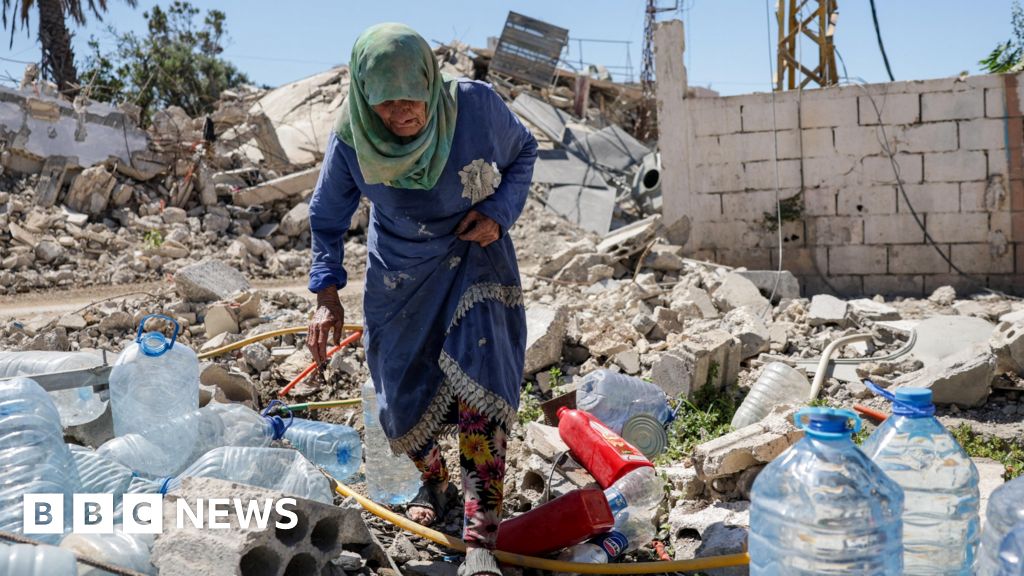
Lebanon's state news agency characterized the air strikes in the Nabatieh district on Thursday as among the most intense since the beginning of the conflict, reporting 18 fatalities, 33 injuries, and significant damage to multiple buildings.
In response, Hezbollah claimed to have ambushed an Israeli unit in southern Lebanon, destroying three Israeli tanks using guided missiles and targeting troops with rocket and artillery fire.
Israeli Prime Minister Benjamin Netanyahu expressed his condolences to the families of the fallen soldiers, stating on X that he directed the IDF to 'strike Hezbollah with full force.' He emphasized that Israel would not tolerate attacks on its soldiers or territory and would impose severe consequences on Hezbollah.
Lebanon has become embroiled in the conflict between Israel, the US, and Iran shortly after the fighting commenced, with Hezbollah launching rockets into Israel in retaliation for an attack that resulted in the death of Iran's supreme leader.
Israel responded with a bombing campaign across Lebanon and has occupied approximately 5% of the southern territory to push back Hezbollah fighters from its northern border.
The ongoing conflict has resulted in at least 3,912 fatalities, including women and children, and left 11,699 others injured, according to the Lebanese health ministry.
Approximately one million people are currently displaced, and numerous communities in southern Lebanon have been entirely devastated.
Hezbollah has vowed to persist with its attacks as long as Israeli military operations continue.
Domestically, Netanyahu faces pressure to maintain military actions against Hezbollah, which may lead to tensions with US President Donald Trump, who has openly criticized Israel's military strategy in Lebanon.
Israel's far-right National Security Minister Itamar Ben-Gvir remarked that 'all of Lebanon must burn' following the deaths of the four soldiers, asserting that Israel must convey to the world that the security of its citizens is non-negotiable.
French Foreign Minister Jean-Noël Barrot urged Israel to adhere to the terms of the recent agreement and called on the US to exert influence on the Israeli government.
The US-Iran deal, signed on Thursday, includes stipulations regarding Iran's nuclear ambitions, sanctions relief, and a commitment to reaching a final settlement within 60 days, which can be extended by mutual consent.
A new round of direct negotiations scheduled for Friday was postponed after US Vice-President JD Vance canceled his planned trip to Switzerland for the discussions.
Vance had previously criticized the stance of some members of Netanyahu's cabinet towards the agreement, suggesting they should recognize the reality of the situation.
He noted that if he were part of the Israeli government, he would reconsider attacking their only significant ally left in the world.
Vance specifically mentioned Ben-Gvir and Finance Minister Bezalel Smotrich as critics of the deal, challenging them to present an alternative proposal to address national security issues.
Netanyahu highlighted the importance of preserving Israel's relationship with the US, stating that Washington has consistently supported Israel during its conflict with Iran.
However, this relationship has recently shown signs of strain, with reports indicating that Trump has expressed frustration with Netanyahu during their phone conversations.
US officials have clarified that while Lebanon is included in the ceasefire framework, the withdrawal of Israeli forces from Lebanese territory was not stipulated as a condition of the agreement, and Israel retains the right to self-defense.