Federal Judge Blocks Trump Administration's Immigration Court Arrest Policy
A federal judge in California has issued a ruling that halts the Trump administration's policy of making arrests at immigration courts, a move that has drawn significant national concern.
A federal judge in California has issued a nationwide injunction against the Trump administration's policy allowing arrests at immigration courts. This ruling effectively ends a controversial practice that has attracted widespread attention and concern across the country.
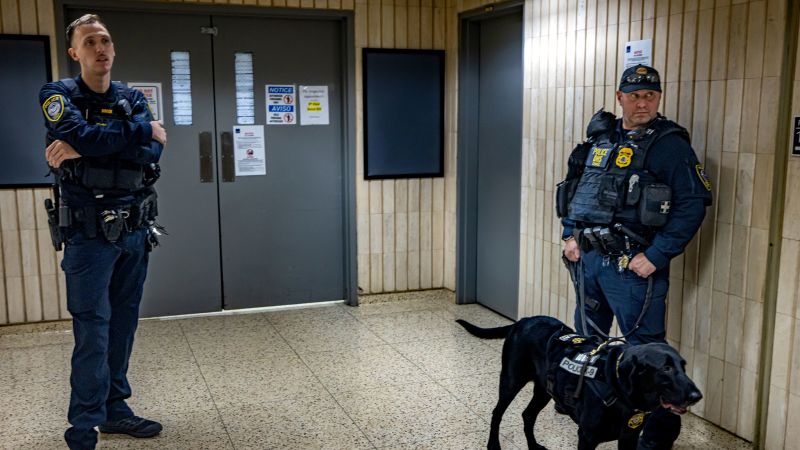
Last year, Immigration and Customs Enforcement (ICE) began apprehending migrants within courthouse hallways shortly after they presented their cases. This approach raised serious concerns among legal representatives and advocates, who argued that it transformed immigration courts from venues of justice into environments of intimidation, penalizing individuals who were attempting to comply with legal procedures.
The ruling on Tuesday represents a significant setback for the Trump administration, which had rescinded longstanding guidelines that restricted immigration enforcement activities in or near courthouses. Officials from the Trump administration contended that these prior guidelines obstructed the ability of immigration enforcement officers to capture individuals deemed dangerous.
In a comprehensive 71-page decision, Judge P. Casey Pitts noted the "chilling effect" that ICE's policy had on the judicial process, describing it as "arbitrary and capricious." He emphasized that merely extending the courthouse-arrest policies set for 2025 to include immigration courthouses would not resolve the fundamental issues with those policies. According to Pitts, the policies failed to consider the detrimental impact of courthouse arrests on noncitizens' willingness to attend court hearings, which is a crucial element of ICE's 2021 guidance and an important aspect of the broader problem.
Pitts further stated, "In summary, ICE’s 2025 courthouse-arrest policies lack any rational basis for the agency’s decisions, including (1) the removal of previous restrictions on civil arrests at immigration courthouses and (2) the failure to apply new limitations to immigration courthouses."
Following the ruling, Jordan Wells, a senior staff attorney at the Lawyers’ Committee for Civil Rights of the San Francisco Bay Area, expressed support for the decision. He remarked, "The courthouse is meant to be a refuge for the pursuit of justice, not a hunting ground for ICE. No immigrant, whether appearing in San Francisco, Miami, Chicago, or New York, should be forced to choose between their liberty and their day in court," in an interview with CNN.
James Percival, General Counsel for the Department of Homeland Security, responded to the ruling by stating on X, "When a judge sentences a defendant, the defendant is taken into custody. If an alien is ordered removed by an immigration judge, the same should happen. A district judge ordering otherwise is naked judicial activism in service of an anti-American, open borders agenda."