Equatorial Guinea Government Resigns Due to Unmet Targets, Says Vice-President
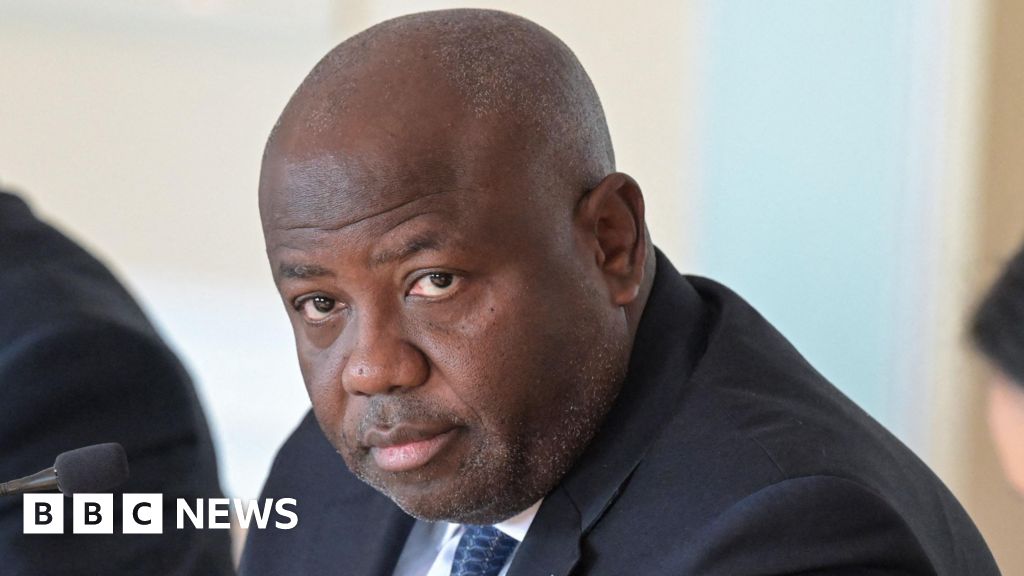
The government of Equatorial Guinea has resigned after achieving only 10% of its objectives, according to Vice-President Teodoro Nguema Obiang Mangue.
The government of Equatorial Guinea has stepped down following its failure to meet set objectives, as announced by Vice-President Teodoro Nguema Obiang Mangue.
Obiang, who is also the son of President Teodoro Obiang Nguema Mbasogo, revealed that the prime minister had submitted the resignations of all government members due to the administration achieving only 10% of its goals.
While specific targets were not disclosed, a statement from the ruling party indicated that President Obiang had noted issues of corruption within the government and its inability to diversify the economy.
Teodoro Obiang Nguema Mbasogo, recognized as the world's longest-serving leader, has held power in the oil-rich West African nation since 1979 and has a history of placing family members in significant government positions.
The outgoing government was appointed in 2024, with Manuel Osa Nsue Nsua serving as prime minister.
In a statement made on Tuesday, the vice-president stated that the resignation aligns with the principle that public management responsibility should yield results.
He emphasized that the level of achievement was markedly insufficient compared to the expectations and commitments made, sharing his thoughts on X.
The ruling Democratic Party of Equatorial Guinea (PDGE) released a statement on Facebook expressing the president's dissatisfaction with the management of the outgoing government, and a new government is anticipated to be appointed soon.
The PDGE statement further highlighted concerns regarding the misuse of state resources for personal gain and the stagnation in the execution of development initiatives.
President Obiang also pointed out that the government had failed to implement policies aimed at diversifying the economy, particularly in the agricultural sector, which would help reduce dependence on imported goods that could be produced domestically.
Equatorial Guinea's economy is predominantly dependent on petroleum, with oil and gas comprising the majority of its exports and revenue.
Despite the country's oil wealth, a significant portion of its 1.8 million residents have not seen benefits, as poverty continues to be a widespread issue. The economy has faced a downturn in recent years due to decreased production and demand for oil.