DOJ Rejects Judge's Request for Declarations on Anti-Weaponization Fund
The Justice Department has declined a judge's request for court declarations confirming the termination of a controversial $1.8 billion fund intended for victims of government weaponization.
The Justice Department (DOJ) is refusing to fulfill a judge's request for court declarations from senior administration officials regarding the status of a contentious $1.8 billion fund designed to compensate individuals who claimed to be victims of government weaponization under previous administrations.
In a court filing made on Friday, the DOJ described the requested declarations as 'unnecessary,' asserting that the judge's order raises 'serious separation of powers concerns.'
This case, taking place in Alexandria, Virginia, is one among several legal challenges concerning the proposed anti-weaponization fund, which originated from a settlement linked to a questionable lawsuit filed by former President Donald Trump against the IRS. The fund aimed to provide compensation for individuals alleging victimization by government actions during prior administrations, leading to claims that it could serve as a financial resource for Trump's supporters.
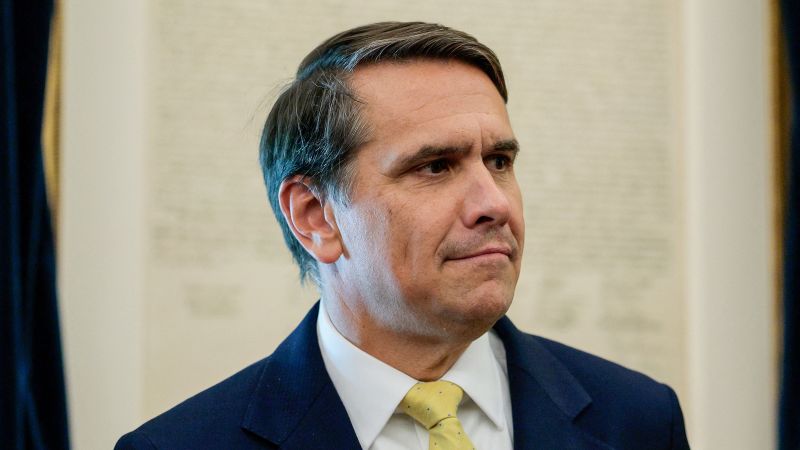
As political opposition and legal challenges intensified, the Biden administration opted to abandon the fund's plans. Judge Leonie M. Brinkema, presiding over the case, indicated a tendency to deem the legal dispute moot. However, she requested declarations from acting Attorney General Todd Balance, his deputy Associate Attorney General Stan Woodward, and Treasury Secretary Scott Bessent, confirming their commitment not to take any actions to establish or operate the Anti-Weaponization Fund.
In her June 12 order, Judge Brinkema stated that without such declarations, the case would proceed to subsequent legal steps.
In response to the judge’s request, the DOJ referenced Balance's testimony before Congress, in which he clearly stated that the fund was 'not going forward, period.' Additionally, Woodward's signature on previous court documents reiterated the same stance.
The DOJ further contended that there is no legal basis for the court to compel testimony from the Associate Attorney General and two Cabinet members.
A post from the DOJ's account on X (formerly Twitter) elaborated on the situation, stating: 'In essence, the judge’s demand for declarations was an attempt to require her to personally sign-off on any and all future settlements, separate from this non-existent Fund, that the department may make. Judges do not get to insert themselves into the department’s routine settlement authority.'
This article has been updated with additional details.