Bowen: Iran Deal Concludes Trump's War, Highlighting Limits of US Power
The recent agreement to halt hostilities and reopen the Strait of Hormuz underscores the repercussions of President Trump's foreign policy decisions, particularly in relation to Iran.
The conflict initiated during President Donald Trump's administration is now regarded as one of his most significant foreign policy missteps to date. This situation complicates the United States' ability to deter adversaries and has strained relationships with oil-rich Arab monarchies in the Gulf region, whose stability has been jeopardized and will require years to restore.
Officials from these monarchies have begun discussing the need to diversify their alliances and consider coexistence with Iran, their neighboring country. Observers note that China has been closely monitoring the situation as the U.S. depleted its stockpiles of weapons and faced evident limitations in its power.
The recent agreement, if it proceeds without further complications, marks the conclusion of a conflict that stemmed from miscalculations by both the U.S. and Israel regarding Iran's resilience. This development is expected to bring relief to those whose lives have been disrupted by the war, particularly civilians caught in the crossfire.
Trump stated that the deal would reopen the Strait of Hormuz, alleviating pressure on the global economy and impacting the lives of millions worldwide. The conflict has resulted in thousands of deaths in the Middle East, alongside the destruction of homes and businesses. Furthermore, disruptions in fertilizer production tied to shipments through the strait may lead to food shortages, particularly in Sub-Saharan Africa, later this year.
While the agreement does not constitute a peace treaty, it has not yet been publicly disclosed in full; negotiators have indicated that it contains 14 key points across two pages. Besides reopening the strait, the memorandum extends the ceasefire and lifts the U.S. Navy's blockade on Iranian ports, deferring more contentious topics for future discussions. These topics include the future of Iran's nuclear program and the extent of sanctions relief that Iran might receive in exchange for its concessions.
The war initiated by the U.S. and Israel on February 28 has now officially concluded. On the eve of this conflict, American and Israeli forces were poised for strikes, preparing their aircraft and targeting systems. Concurrently, negotiations in Geneva between Iran and the U.S. were taking place, which had been described as crucial for managing Iran's nuclear ambitions. Reports suggest that Iranian negotiators were optimistic, believing they were engaged in a serious dialogue where both concessions and demands were being considered.
Prior to the outbreak of war, the Strait of Hormuz remained open, facilitating the transportation of approximately 20% of global oil and natural gas, as well as essential petrochemical byproducts crucial for modern life, including agricultural fertilizers and semiconductors.
The memorandum of understanding now allows for nuclear negotiators to reconvene and for vessels to navigate the strait, effectively returning to the status quo that existed just one day before the conflict erupted.
In the initial wave of surprise attacks, Israel targeted and killed Iran's Supreme Leader, Ayatollah Ali Khamenei, along with his top advisors. Simultaneously, a U.S. strike resulted in the destruction of a school in Minab, southern Iran, leading to the deaths of over 150 civilians, including at least 120 schoolchildren, predominantly girls under 12 years old.
Both Trump and Israeli Prime Minister Benjamin Netanyahu made public announcements at the conflict's onset, expressing their belief that the war would be brief and decisive. However, this proved to be a significant miscalculation. Rather than leading to regime change in Tehran, the conflict inadvertently strengthened the Iranian government, which had feared a full-scale U.S. and Israeli intervention.
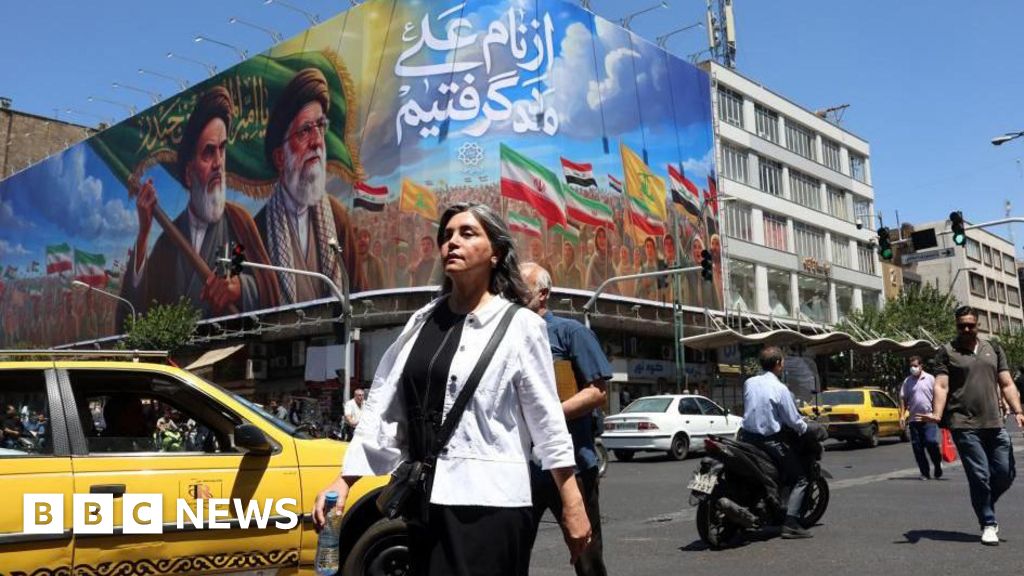
Following Khamenei's death, his son, Mojtaba, was quickly positioned as the new supreme leader, supported by a younger cohort of commanders from the Islamic Revolutionary Guards Corps. This new leadership is characterized by a similar ideological fervor as their predecessors but is noted for being more aggressive and willing to take risks in what they perceive as a fight for the survival of the Islamic regime.
They executed a strategic approach that included closing the Strait of Hormuz and targeting both Iran's Arab neighbors and U.S. military assets. Claims made by U.S. Defense Secretary Peter Hegseth regarding the crippling of Iran's military capabilities were found to be exaggerated.
Israel was a key ally of the U.S. in this conflict but found itself excluded from the negotiations surrounding the memorandum of understanding, which has led to discontent among Israeli leaders. Netanyahu expressed his long-standing ambition to dismantle the Islamic Republic, viewing it as Israel's most significant threat. He now faces criticism from political rivals for jeopardizing Israel's security.
Netanyahu's challenges are compounded by a rapidly approaching general election scheduled for late October. A potential obstacle to peace is Israel's declared intention to maintain its occupation of territories in southern Lebanon, where civilian populations have been displaced, and extensive destruction has occurred.
The Israeli defense minister has indicated that the occupation of Lebanon, Syria, and Gaza will continue indefinitely, while Netanyahu confronts pressure from hardliners and political opponents to escalate military actions in Lebanon, including potential annexation of southern territories.
An Israeli airstrike on Beirut's southern suburbs on a recent Sunday appeared to be an attempt to hinder the negotiations at a critical juncture. However, it seems to have had the opposite effect, prompting a renewed urgency to engage in discussions.
While there is now an opportunity for a pause, it remains premature to assert that the memorandum of understanding can evolve into a comprehensive agreement between the U.S. and Iran. Such a transformative deal for the Middle East is hindered by deep-seated ideological divides and a pervasive lack of trust.
This series of events has been disheartening for all parties involved. The Iranian populace, to whom Trump had promised a vision of freedom on February 28, continues to live under an oppressive regime that, as recently as January, violently suppressed protests, resulting in thousands of deaths.
Despite retaining substantial economic and military power, Trump's impulsive decision to engage in war with Iran is increasingly perceived as a sign of a superpower grappling with its waning influence in an evolving global landscape.