Vince Staples, "Cry Baby," and the Expectations Placed on Rappers
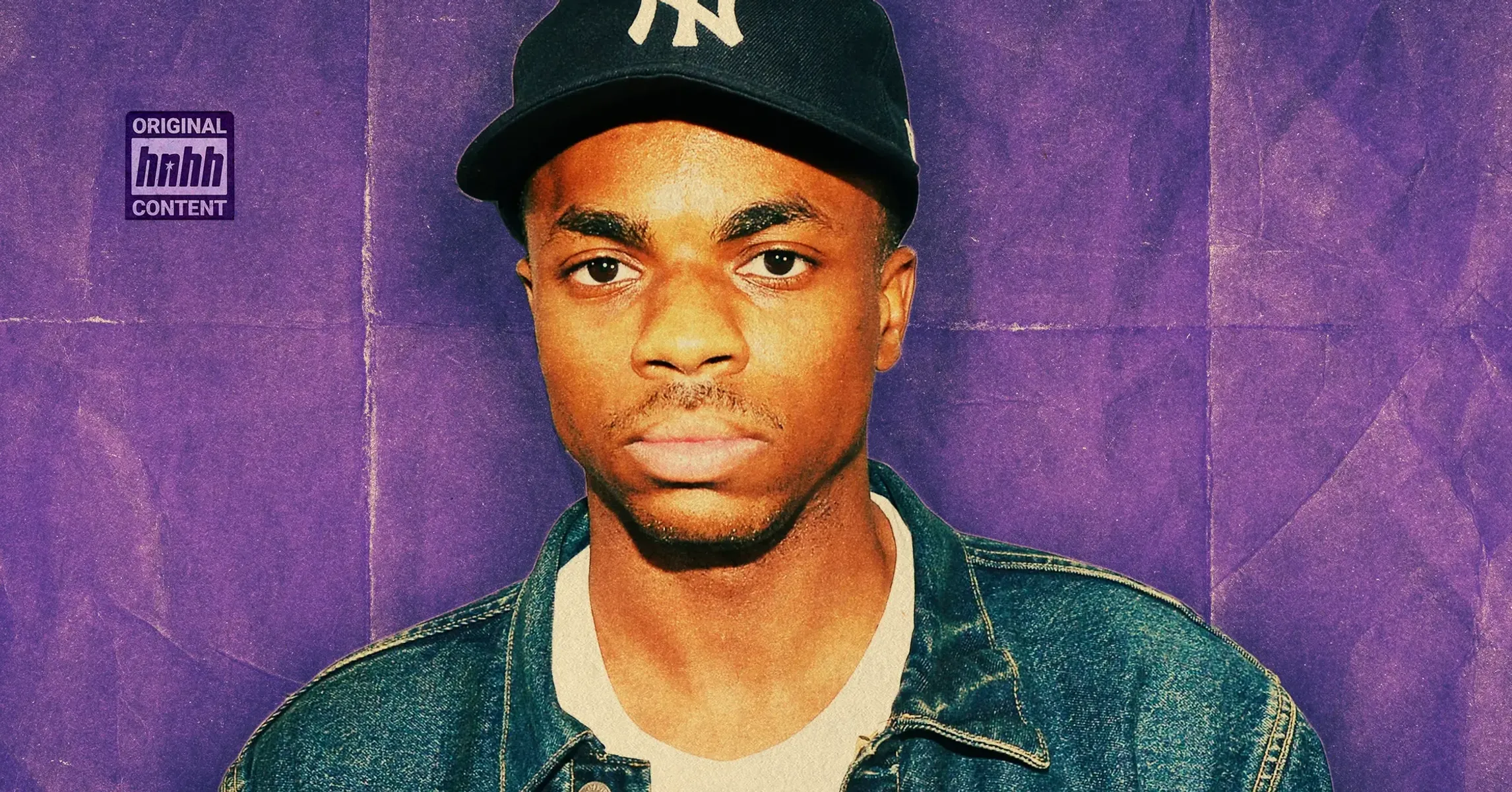
Vince Staples' latest album, "Cry Baby," has sparked debates about artistic expectations placed on rappers, reflecting broader issues of genre and identity in Black music.
Vince Staples has found himself at the center of a discussion about the expectations placed on artists, particularly in the rap genre. As he elaborates on his artistic choices, many listeners continue to assert their beliefs about what he should be doing. Critics suggest he ought to adopt a more aggressive stance, dive deeper into political themes, or focus on commercial success by creating music that aligns more closely with mainstream rap trends. Some even expect him to rival the success of artists like Kendrick Lamar or produce another album akin to his earlier work, 'Summertime '06.'
These varying expectations, while often contradictory, all stem from a common issue: listeners are measuring Vince Staples against standards he never established for himself.
The discourse surrounding his latest release, 'Cry Baby,' which is his first independent album, has intensified these conversations. This project, characterized by its integration of punk, alternative rock, and live instrumentation, has polarized audiences who anticipated a more traditional rap album from the acclaimed artist. While many have commended Staples for his creative evolution, a segment of his audience questions if he has strayed too far from the sound that initially endeared him to fans over ten years ago.
The debate emerging from 'Cry Baby' not only reflects on Staples himself but also on the broader expectations society places on rappers, particularly Black artists who resist confinement to a single genre. Throughout his career, Staples has challenged societal assumptions surrounding race, class, violence, and the music industry. The current controversy surrounding his work suggests he is also confronting the notion that artistic growth must occur within familiar parameters set by audiences.
Much of the critique directed at 'Cry Baby' seems to be based on a public perception of Vince Staples that is more rooted in memory than in his actual body of work. He has often been pigeonholed as merely a gangsta rapper chronicling life in Long Beach, with his artistic merit linked solely to his depictions of violence. This perspective overlooks the multifaceted nature of his music, which, even when addressing themes of gangs and survival, often delves into the systemic issues that contribute to these realities. Staples has consistently illuminated the institutions that have failed these communities and the ways in which Black suffering has been commodified.
This distinction is vital, as many discussions about 'Cry Baby' imply that Staples has forsaken a core aspect of his artistry. Critics have expressed a desire for him to return to creating hardcore rap music, with some arguing that his interviews have become more engaging than his musical output. Others suggest that his recent work represents a departure from the raw ambition that once defined him. However, such arguments tend to reduce Staples to a mere setting, sidelining his broader perspective. The narrative often shifts from his personal journey to a focus on Long Beach, relegating his social critique to the background.
In contrast, Staples' discography tells a different narrative. His previous album, 'Big Fish Theory,' embraced electronic and club influences during a time when many rap fans were skeptical of such sounds. 'FM!' reinvented Los Angeles radio culture into a cohesive concept album. In 'Ramona Park Broke My Heart,' he reflected on the people and places that shaped his identity, while 'Dark Times' explored the emotional burden of carrying these experiences into adulthood. Although the sonic landscape of his music has evolved, the underlying questions he grapples with have remained constant.
Critics' insistence that Staples revert to a role he may have outgrown ignores the fact that the streets have never been the entirety of his narrative; they merely serve as the backdrop. His true focus has consistently been on the broader world that influences these narratives.
Moreover, accusations that Staples has diminished his artistry in 'Cry Baby' by not pursuing a more mainstream direction are perplexing, particularly since amassing wealth has never appeared to be his primary goal. Imposing traditional rap star expectations on an artist who has spent much of his career questioning these very systems speaks more to the audience's perceptions of success in hip hop than to Staples' artistic choices.
Following the release of 'Cry Baby,' a clip from Staples' album launch event gained traction online. In this clip, he reminisced about the release of 'Big Fish Theory' and his inquiry to industry executives about categorizing the album within electronic music. The response he received was, 'You don't belong there.'
This sentiment, though directed at Staples, resonates with many Black artists who have historically been told where they fit within the industry—often by those who profit from their creativity while simultaneously constraining how that creativity can manifest. Numerous genres have been constructed on the foundation of Black innovation, yet they frequently become estranged from the very communities that birthed them.
Rock music serves as a prominent illustration of this phenomenon. Before it became synonymous with white rebellion and counterculture, pioneers like Sister Rosetta Tharpe fused gospel with electric guitar, while Chuck Berry laid the groundwork for rock and roll, and Little Richard revolutionized performance itself. Punk music also has its roots in this history, with Black artists like Detroit's Death producing punk music before the genre even had a name, and Washington D.C.'s Bad Brains emerging as a profoundly influential hardcore band.
This historical context is particularly relevant to the discourse surrounding 'Cry Baby.' Too frequently, the genres of rock and its related styles are reduced to mere aesthetics, when in reality, they encompass a larger narrative of defiance against authority and a rejection of societal norms. The resistance to conform to imposed identities is a theme deeply embedded in both Black music and Black history, defining the very essence of these artistic expressions.
The blues challenged the oppressive conditions faced by Black Americans post-emancipation, while jazz defied conventions and reshaped the landscape of American music. Soul music intertwined with the Civil Rights Movement, and hip hop emerged from marginalized communities, transforming frustration into art, language, and identity. This legacy of rebellion is a long-standing tradition within Black music.
Additionally, Staples is not alone in navigating these expectations. Artists like Rico Nasty have spent years merging punk energy with rap, only to encounter persistent inquiries about their artistic identity. Denzel Curry has seamlessly integrated elements of punk, metal, jazz, and alternative music into his work, despite being predominantly recognized as a rapper. Lil Uzi Vert's incorporation of rock influences and alternative styles has often been perceived as a departure from rap rather than a natural evolution. Similarly, André 3000 faced criticism long before he picked up a flute. Each generation continues to produce Black artists willing to push the boundaries of genre, while audiences often seek to pull them back into predefined categories.
Staples has always been focused on systemic issues. While violence is a recurring theme in his music, it rarely serves as an isolated subject. Instead, he tends to scrutinize the conditions that give rise to it. This perspective has remained consistent, even though Staples has never been an artist to replicate his sound. What unifies his body of work is not genre but a continual inquiry into critical questions: Who benefits from violence? What occurs when survival becomes a person's identity? How do individuals navigate systems that have been designed without their input? What solutions does success truly offer?
To reduce Staples to a label of gangster rapper is a superficial evaluation of his artistry, and it fails to capture the depth of his work. Nonetheless, he is hardly the first musician to grapple with such challenges.
Jay-Z articulated this struggle years ago with the line, 'Hov' on that new sh*t, n*ggas like 'How come?' N*ggas want my old sh*t, buy my old albums.' This sentiment has accompanied musicians across generations. While audiences may profess to celebrate artistic growth, they often resist it in practice. The albums that initially resonate with listeners become benchmarks, and subsequent projects are measured against a version of the artist that may no longer exist.
The hip hop genre is replete with similar examples. Fans desired Nas to recreate 'Illmatic,' and they wished for Lil Wayne to remain in the era of 'Tha Carter III.' Tyler, The Creator has built a significant second act by refusing to be confined by the persona that first garnered him attention through Odd Future. Yet, many of those same artistic risks are now acknowledged as integral to their legacies.
Jay-Z was never going to replicate 'Reasonable Doubt,' and Janelle Monáe was not destined to spend her career rehashing 'The ArchAndroid.' The narrative of Black music has never been shaped by artists who remained stagnant; rather, it has been crafted by those willing to embrace the unknown in pursuit of innovation. 'Cry Baby' is a testament to that tradition, regardless of whether listeners choose to embrace it.