Vince Staples, "Cry Baby," and the Expectations Placed on Rappers
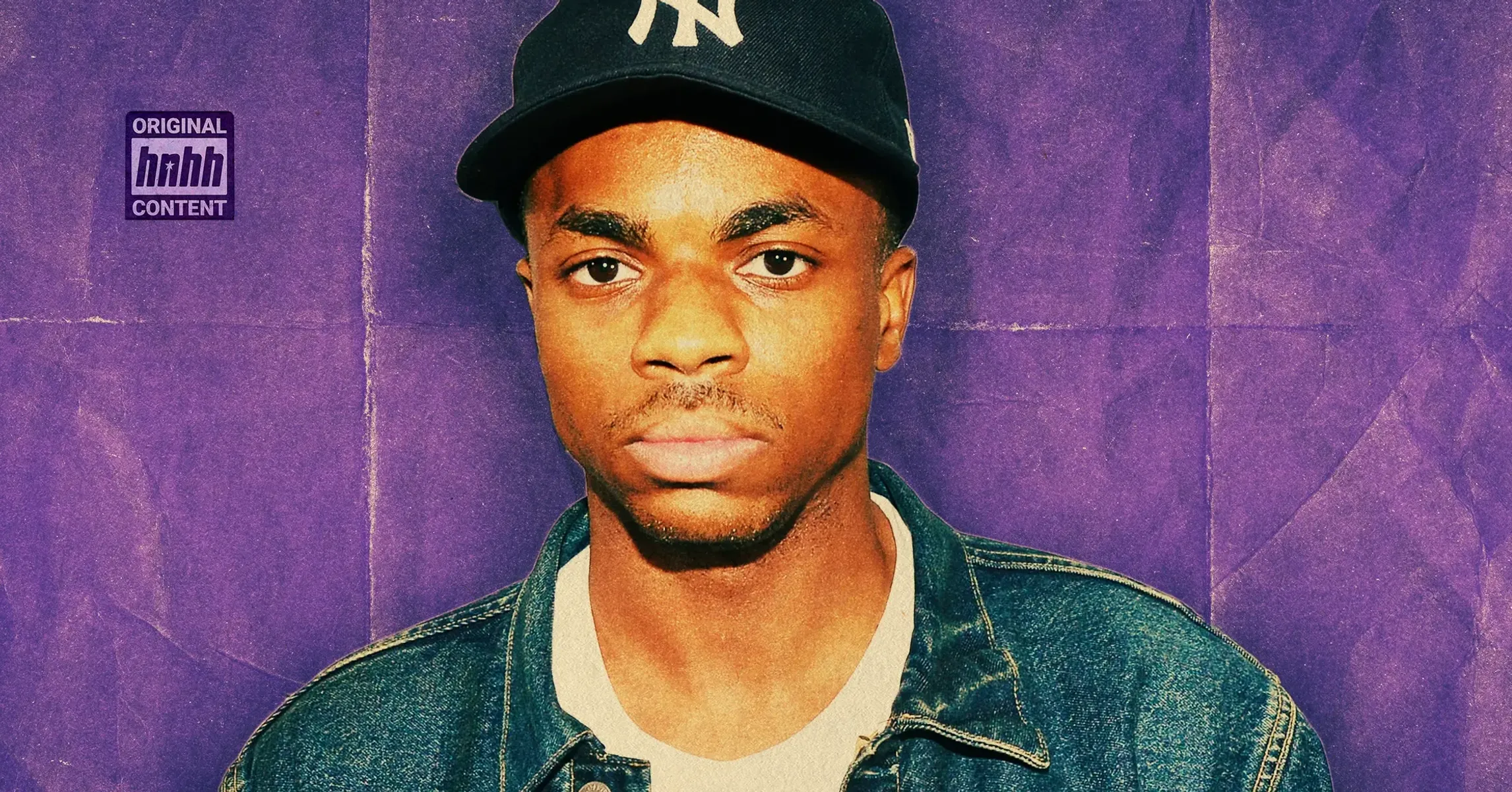
Vince Staples faces contrasting expectations following his latest album, "Cry Baby," which challenges the notion that artists must conform to familiar genres and narratives.
Vince Staples has found himself at the center of a debate regarding the expectations placed on him as an artist. Despite his efforts to clarify his artistic intentions, many listeners seem determined to redefine his career path. Observers of his interviews often express what they believe he should be doing, suggesting he ought to adopt a more aggressive political stance, produce more traditional rap music, or follow in the footsteps of successful contemporaries like Kendrick Lamar. Some even wish for him to recreate the sound of his earlier work, particularly his acclaimed album, 'Summertime '06.'
These mixed expectations reveal a common theme: many people are measuring Staples against standards he never established for himself. The discourse surrounding his latest project, 'Cry Baby,' marks a continuation of this trend. Released as his first independent album, it has sparked polarized reactions, particularly due to its departure from conventional rap sounds. 'Cry Baby' incorporates elements of punk and alternative rock, which has led some fans to question whether Staples has strayed too far from the style that initially gained him recognition over a decade ago. While many appreciate his artistic evolution, others express concern that he has lost touch with the essence of his earlier work.
The conversation around 'Cry Baby' reflects broader societal expectations of Black artists, particularly those who refuse to be confined to a single genre. Staples has consistently challenged societal norms related to race, class, violence, and the music industry itself. This latest controversy suggests that he is now also pushing back against the belief that artistic growth must occur within the boundaries defined by audience familiarity.
Criticism of 'Cry Baby' often stems from a perception of Staples that is more rooted in public memory than in his actual discography. Many view him primarily as a gangsta rapper, focusing on his portrayal of street life in Long Beach. This narrow perspective overlooks the depth of his artistry, which has always delved into the systemic factors surrounding violence and poverty rather than simply glorifying them. His music has illuminated the institutions that have failed to support marginalized communities and the consumption of Black suffering as entertainment.
This distinction is crucial because much of the criticism directed at 'Cry Baby' assumes that Staples has abandoned vital aspects of his artistry. Some critics argue that he should revert to producing hardcore rap, while others claim that his interviews have become more engaging than his music. A few even suggest that his recent work reflects a decline in the intensity that once characterized his output. Yet, such views often reduce Staples to a mere setting rather than acknowledging his unique perspective. Long Beach becomes the focal point, overshadowing the social commentary that has always been central to his work.
In fact, Staples' discography tells a different story. His previous album, 'Big Fish Theory,' incorporated electronic and club influences at a time when many rap fans were uncertain about such sounds. The album 'FM!' served as a conceptual exploration of Los Angeles radio culture. Meanwhile, 'Ramona Park Broke My Heart' reflected on the people and places that have shaped his identity, and 'Dark Times' grappled with the emotional burdens of adulthood. Although the sonic elements of his work have evolved, the core questions he raises about identity and survival have remained consistent.
Critics often seem to want Staples to fit into a role he may have outgrown, if he was ever genuinely interested in it. The streets are not the entirety of his narrative; they serve as a backdrop to a larger story. Furthermore, some have claimed that Staples is limiting himself with this project and failing to pursue broader mainstream success. This perspective is puzzling, considering that amassing wealth has never appeared to be his primary goal. Applying traditional rap star expectations to an artist who has consistently challenged these norms reveals more about the listeners' perceptions of success in hip hop than it does about Staples himself.
Soon after the release of 'Cry Baby,' a video clip from Staples' album launch event began circulating online. In it, he recalls asking industry executives if 'Big Fish Theory' could be classified alongside electronic music, to which he received the dismissive response, 'You don't belong there.' Although this remark was likely directed at Staples, it echoes a familiar sentiment. As we approach Juneteenth, it's important to consider the historical context of Black artists who have long been told where they belong, often by industries that profit from their creativity while constraining their expressive freedoms.
The history of rock music serves as a pertinent example of this phenomenon. Before becoming synonymous with white rebellion, the genre was shaped by Black artists such as Sister Rosetta Tharpe, who fused gospel with electric guitar, Chuck Berry, who established the foundations of rock and roll, and Little Richard, who revolutionized performance. Punk music emerged from this lineage, with Black artists like Detroit's Death creating punk long before many listeners could identify it as such. Washington D.C.'s Bad Brains became one of the most influential hardcore bands, impacting countless musicians who followed.
This historical context is especially relevant to discussions surrounding 'Cry Baby.' Rock and its associated genres have often been reduced to mere aesthetics, but they have always represented broader themes of rebellion against authority and societal expectations. The resistance to imposed identities is a recurring theme in Black music and history, defining its trajectory. Genres like the blues, jazz, soul, and hip hop emerged as forms of resistance against the societal constraints faced by Black Americans, transforming frustration into art and identity.
Moreover, Staples is not alone in confronting these expectations. Artists like Rico Nasty have faced scrutiny for blending punk influences with rap, while Denzel Curry has incorporated elements of punk, metal, jazz, and alternative music throughout his career, despite being primarily labeled a rapper. Lil Uzi Vert's integration of rock influences has been perceived as a deviation from traditional rap, and André 3000 experienced similar criticism long before he embraced the flute. Each generation continues to produce Black artists willing to push genre boundaries, often encountering resistance from audiences eager to confine them.
Throughout his career, Staples has maintained a focus on systemic issues. While violence appears in his work, it is rarely treated as an end in itself. Instead, he examines the conditions that give rise to such violence. This perspective has remained consistent, even as Staples has never confined himself to a single sonic style. What unites his catalog is not a specific genre but a commitment to inquiry. For over a decade, he has posed critical questions about who benefits from violence, what happens when survival becomes a defining identity, how individuals navigate systems designed without their input, and what true success can accomplish.
To reduce Staples to merely a gangsta rapper is to overlook the complexities of his artistry. However, he is not the first artist to grapple with this challenge. Jay-Z famously addressed this issue years ago, rapping, 'Hov' on that new sh*t, n*ggas like 'How come?' N*ggas want my old sh*t, buy my old albums.' This sentiment encapsulates the experience of musicians across generations. While audiences may celebrate artistic growth in theory, they often resist it in practice. The albums that resonate most with listeners become benchmarks, and subsequent projects are frequently measured against a version of the artist that has evolved or transformed.
Hip hop is replete with similar examples. Fans expected Nas to replicate 'Illmatic,' while Lil Wayne was urged to remain in the era of 'Tha Carter III.' Tyler, The Creator built a successful second act by refusing to be confined to the persona that first gained him attention with Odd Future. Yet many of these artistic risks are ultimately recognized as integral to their legacies. Jay-Z was never meant to recreate 'Reasonable Doubt,' just as Janelle Monáe was not destined to repeat 'The ArchAndroid.' The narrative of Black music has always been shaped by artists willing to embrace risk in pursuit of innovation. 'Cry Baby' embodies this tradition, regardless of whether listeners choose to embrace it.