US Commerce Secretary Raises Concerns Over ASML's EUV Machines in China
U.S. Commerce Secretary Howard Lutnick has expressed concerns to ASML regarding potential breaches involving extreme ultraviolet lithography machines, which are crucial for advanced semiconductor manufacturing.
According to a report by Bloomberg, U.S. Commerce Secretary Howard Lutnick has recently communicated his concerns to senior executives at ASML, a Dutch chipmaker. He indicated that one of ASML’s extreme ultraviolet lithography machines, known as EUV systems, might have been shipped to China. These machines are the only ones globally capable of printing the most advanced semiconductor patterns, and their presence in China would violate export controls that have prohibited ASML from selling EUV machines to the country since the Trump administration began.
This allegation is considered serious. Senior officials within the U.S. administration have informed Bloomberg that they possess evidence suggesting ASML shipped components and transport equipment related to EUV technology to China. However, they have not publicly disclosed this evidence to either Bloomberg or ASML. In response, ASML has stated that no EUV machine exists in China, nor has there ever been one. The Commerce Department has not responded to inquiries regarding the evidence of an actual EUV system being located in China.
Despite ASML's relative obscurity outside of the chip industry, the company's role is critical. ASML is the sole producer of machines capable of EUV lithography, which is essential for manufacturing cutting-edge processors at companies like TSMC, which supplies chips to tech giants such as Nvidia and Apple. ASML has invested nearly two decades and billions of dollars into developing these machines, creating a monopoly that has elevated ASML to the status of Europe’s most valuable public company, with a market capitalization around $700 billion, significantly increasing over the past year due to high demand for AI-driven chips.
The implications of the potential breach are significant. If even a single EUV machine were to be found in China, it would represent a major violation of the U.S. export control framework designed to restrict advanced AI capabilities from reaching Beijing's military and industrial sectors.
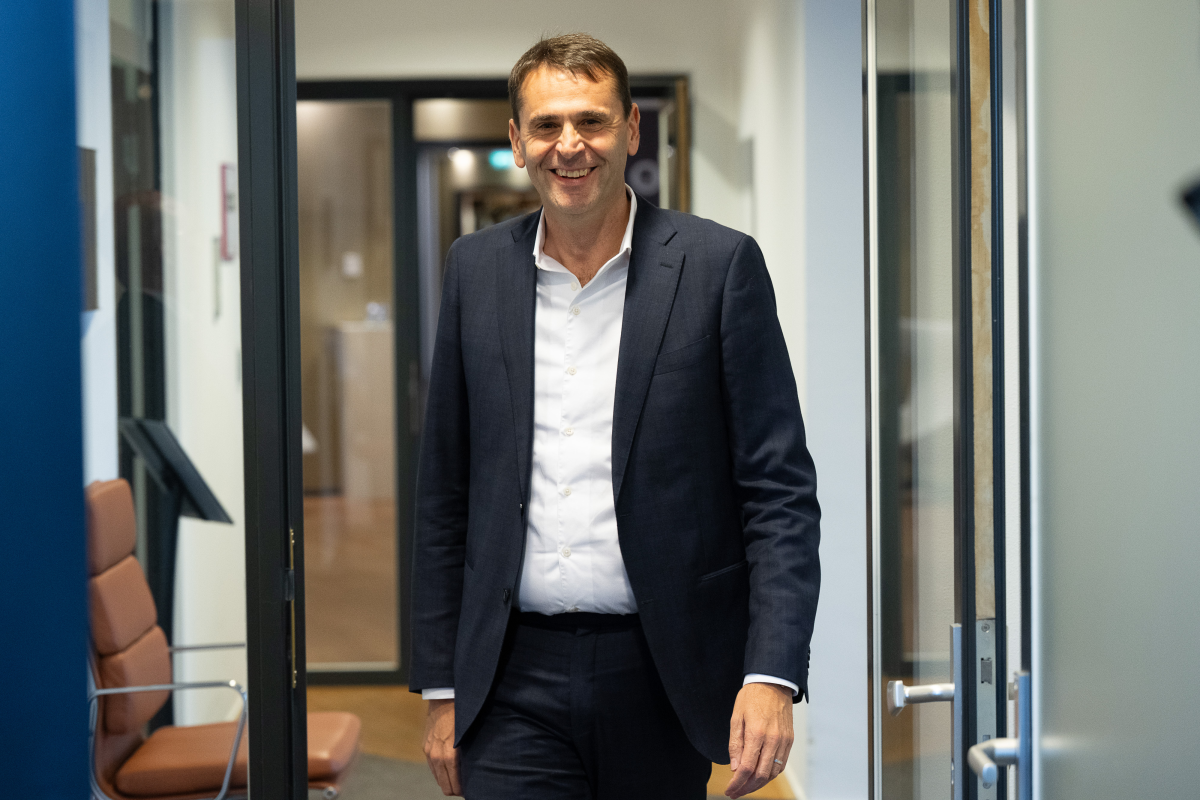
In a conversation with ASML CEO Christophe Fouquet six weeks prior to the emergence of this report, I directly inquired about the concerns surrounding China. Fouquet elaborated on ASML’s stringent tracking of every machine it has ever shipped, clarifying that they are either actively in use with monitored customers or have been returned to ASML. He noted that the company implemented an internal firewall years ago, which restricts access to EUV technology, documentation, and training from employees based in China, ensuring they do not have access to sensitive information.
Fouquet further explained that the ability to produce an EUV machine was largely due to 80% of the technology being derived from decades of prior knowledge. He emphasized that solving the challenge of generating EUV light took 20 years and argued that it is impossible to reverse-engineer a machine that has never been possessed. He maintained that no one in China has ever had access to an EUV machine.
In terms of commercial strategy, ASML does sell older-generation deep ultraviolet (DUV) tools to China, which were shipped a decade ago. However, Fouquet characterized this as a strategic decision to maintain a generational gap that prevents Chinese customers from becoming competitors, estimating that approximately 20% of ASML’s revenue in 2026 will come from these authorized sales to China. He pointed out that jeopardizing the EUV ban would endanger not only that revenue stream but also ASML's position as a leading monopoly in European industry.
While these statements do not definitively disprove the allegations, they highlight ASML’s commitment to compliance with export regulations. The government has yet to release its evidence, and it is advisable to withhold judgment until that occurs.
Under Lutnick’s leadership, the Commerce Department allocated up to $150 million of taxpayer funds to xLight, a startup focused on developing next-generation light-source technology that could challenge ASML’s EUV monopoly. The CEO of xLight indicated that the company sees itself as a future partner to ASML, rather than a direct competitor. However, when this perspective was presented to Fouquet, he remained skeptical, asserting that ASML does not perceive a need for xLight’s technology to maintain its competitive edge.
Additionally, xLight is not the only new player pursuing innovations in lithography. Investor Peter Thiel has supported Substrate, another startup that aims to develop EUV technology and compete with ASML more directly than xLight intends to.
As reported by Bloomberg, a bipartisan bill currently being considered in Congress proposes a more comprehensive ban on all of ASML's deep ultraviolet shipments to China. This legislation, which cleared a key committee in April, would affect approximately one-fifth of ASML’s anticipated revenue for 2026. The Trump administration has yet to formally state its position on this bill.