
Toy Story 5: A Film Addressing Parental Anxiety in the Age of Social Media
The latest Toy Story film tackles the challenges of social media and loneliness, resonating deeply with parents and highlighting contemporary issues faced by children.
Pixar's latest release, Toy Story 5, addresses the challenges of social media and digital devices while exploring themes of loneliness and despair that resonate with both children and adults.
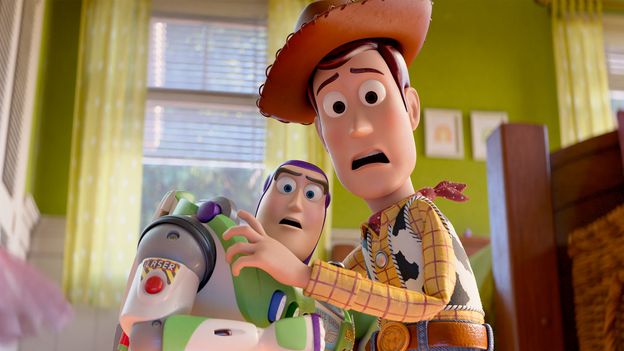
The film centers on Bonnie, an eight-year-old character voiced by Scarlett Spears, who enjoys playing with her toys Jessie, voiced by Joan Cusack, and Buzz Lightyear, voiced by Tim Allen. Despite her love for these characters, Bonnie struggles to make friends in real life, leading her parents to purchase a tablet named Lilypad, voiced by Greta Lee, to help her engage with her peers through online games.
This decision creates anxiety among Bonnie's toys, who fear being rendered obsolete by technology. However, the greater stress falls on Bonnie's parents, who grapple with the dangers of exposing her to potential online abuse while also wanting to prevent her from feeling isolated. This plot is particularly relevant given recent announcements from UK Prime Minister Sir Keir Starmer, who revealed plans to ban social media for individuals under 16 starting in January, following Australia’s lead as the first country to implement such a measure last year.
Unlike previous Pixar films, which typically feature magical beings representing parental struggles, Toy Story 5 incorporates ordinary human characters, emphasizing the loneliness of children and the despair of parents trying to help them. The film depicts a stark moment when Bonnie asks her parents, "Why won't anyone be my friend?"—a line that encapsulates the film's emotional weight.
While Pixar is known for its ability to evoke deep feelings about childhood and parenthood, Toy Story 5 stands out for its prolonged focus on the emotional challenges faced by human children and their parents. This film diverges from the traditional Toy Story narrative, which often sidelines children in favor of toys dealing with their existential crises. In this installment, the emotional turmoil of children takes center stage, leaving parents to grapple with their own helplessness.
Despite its poignant themes, Toy Story 5 does not rank among the best in the franchise. It lacks some of the humor and excitement found in the earlier films and suffers from an overabundance of characters and convoluted plotlines. For instance, a subplot involving multiple Buzz Lightyear toys could have been eliminated to streamline the story.
Nonetheless, this film's frank discussion of youth's pain and insecurity marks it as one of Pixar's most thought-provoking offerings. The studio’s hesitance to fully condemn social media and technology may stem from its connection to various Disney apps and video games. Still, the film's exploration of serious themes suggests a potential shift for Pixar, which may eventually focus solely on human characters in future narratives.
Toy Story 5 is set to be released in theaters across the US and UK on June 19.