SpaceX's initial public offering has made headlines as the largest in history, raising $75 billion and turning Elon Musk into the world's first trillionaire. Here’s a detailed look at the IPO and its implications.
SpaceX has garnered significant attention from media, investors, and the general public due to its pioneering reusable rocket launches, the successful deployment of its Starlink satellite network, and the prominent figure of its founder and CEO, Elon Musk.
On June 12, 2026, SpaceX made headlines with its initial public offering (IPO), which has been described as unprecedented in scale. The company set the price of its 555.6 million shares at $135 each, successfully raising $75 billion. This IPO is now recognized as the largest in history, a milestone that also elevated Musk to the status of the world’s first trillionaire.
TechCrunch has been closely following SpaceX’s journey, covering its early challenges and victories, and continues to provide updates now that the company is publicly traded. This article serves as a comprehensive resource for all relevant news surrounding the SpaceX IPO.
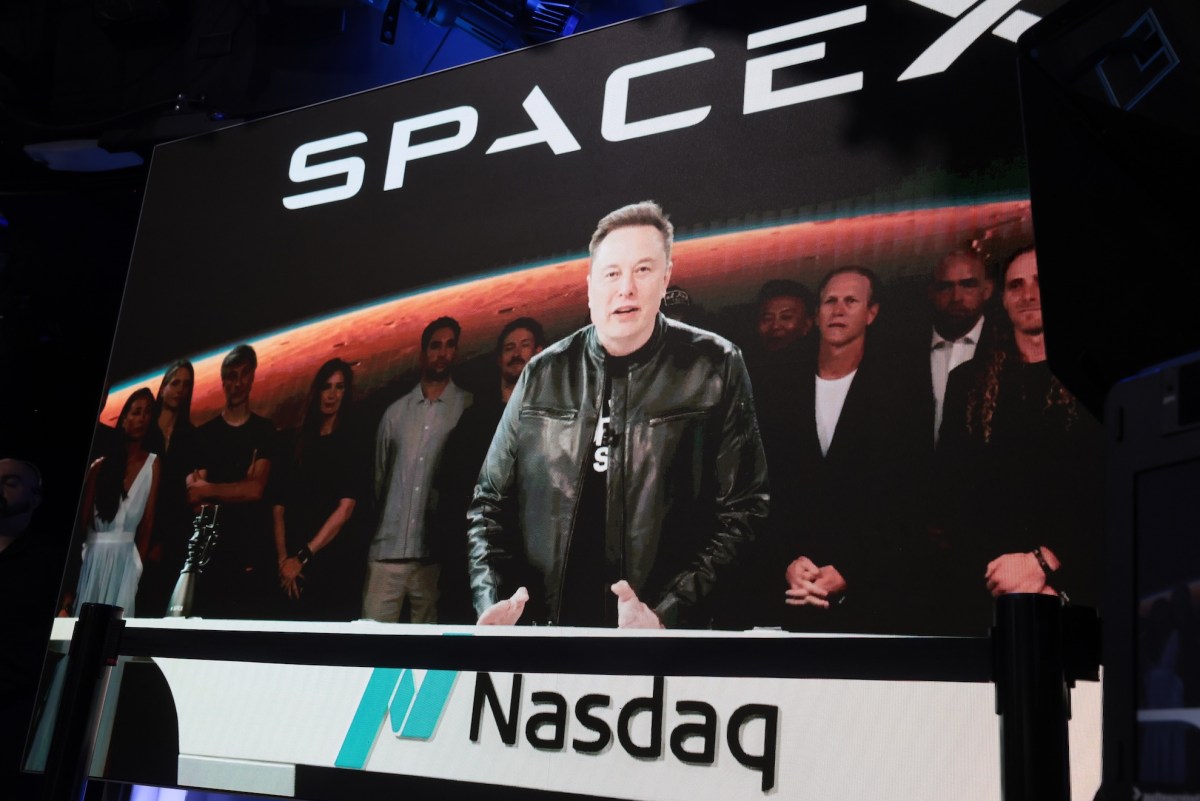
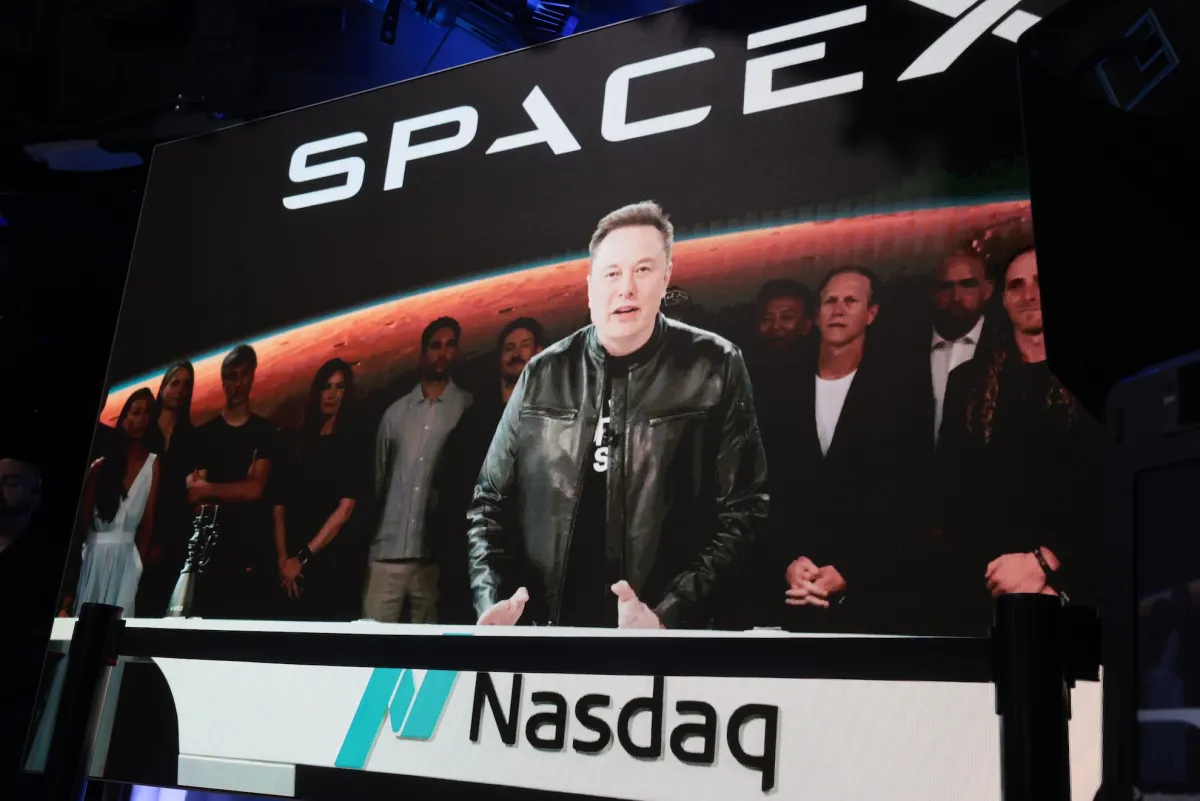
On the first day of trading, SpaceX shares experienced a notable increase. By 2:30 p.m. ET, the shares had risen over 15% to reach $186.15. They opened at $150 on the Nasdaq public exchange, marking an 11% increase for one of the most anticipated debuts in financial history. As trading progressed, shares soared by 30%, ultimately closing at $160.95, reflecting a 19% increase for the day.
The trading volume was exceptionally high, as anticipated for such a significant IPO. Robinhood reported 'record-breaking traffic' on its platform following SpaceX's historic market debut.
In an interview with CNBC on June 12, SpaceX's Chief Operating Officer, Gwynne Shotwell, made an intriguing comment regarding a potential merger between SpaceX and Tesla, suggesting it might simplify operations for Musk.
Banks involved in the IPO have also benefited significantly, with total fees amounting to approximately $500 million. Major players like Goldman Sachs and Morgan Stanley emerged as the primary financial beneficiaries, according to the Wall Street Journal.
Musk expressed his gratitude towards SpaceX employees on X, the social media platform he owns, as the stock price climbed. He stated, 'I love the incredible people of SpaceX beyond words' and shared various posts related to the IPO, including a photo of insiders wearing green shoes—a reference to the 'green shoe option,' which allows underwriters to sell up to 15% more shares than initially planned if demand is strong.
To analyze the implications of SpaceX becoming a publicly traded entity, TechCrunch Senior Reporter Sean O’Kane and AI Editor Russell Brandom hosted a special episode of their Equity podcast, available for listening on various platforms, including YouTube.
Given the scale of this IPO, significant financial operations were underway behind the scenes. The debut on Nasdaq was closely monitored, and for the latest updates, financial news outlets such as Bloomberg and CNBC provided live coverage and insights into any potential challenges faced during the stock's market entry.
The S-1 registration document released by SpaceX offered an in-depth look at the company's financials and business operations. Notably, SpaceX reported a loss of $4.9 billion on revenues exceeding $18 billion for the year 2025, contributing to a total loss of over $37 billion since the company's inception.
Elon Musk retains approximately 85.1% of the company’s voting power, underscoring his significant influence over SpaceX's direction as a publicly traded company.
An estimated 4,400 SpaceX employees may potentially become millionaires following the IPO, as reported by the New York Times.
With the IPO, Musk's wealth surged to over $1 trillion, amidst a complex landscape of public perception and financial power dynamics. His control over SpaceX is characterized by a level of voting power that exceeds that of typical tech founders.
The SpaceX IPO has implications for various stakeholders, primarily benefiting Musk and a select group within his inner circle, while other investors in special purpose vehicles (SPVs) may face uncertainties regarding their holdings until post-IPO lock-up periods expire.

The S-1 document further revealed that SpaceX's business is heavily focused on its Starlink satellite internet service, alongside substantial losses and ambitious future projects associated with its xAI division.
Despite the excitement surrounding the IPO, challenges remain, particularly about the future of the Starship program and potential dilution risks for investors, which were highlighted in the updated S-1 filing.
In the lead-up to the IPO, SpaceX secured various contracts, including a notable deal with Anthropic worth $1.25 billion per month for computing services. Google also entered into a short-term agreement with SpaceX for $920 million monthly to meet unexpected demands for its AI products.
This article was initially published at 10 a.m. ET on June 12, 2026, and has since been updated with the latest developments regarding the SpaceX IPO, share prices, and associated events.