
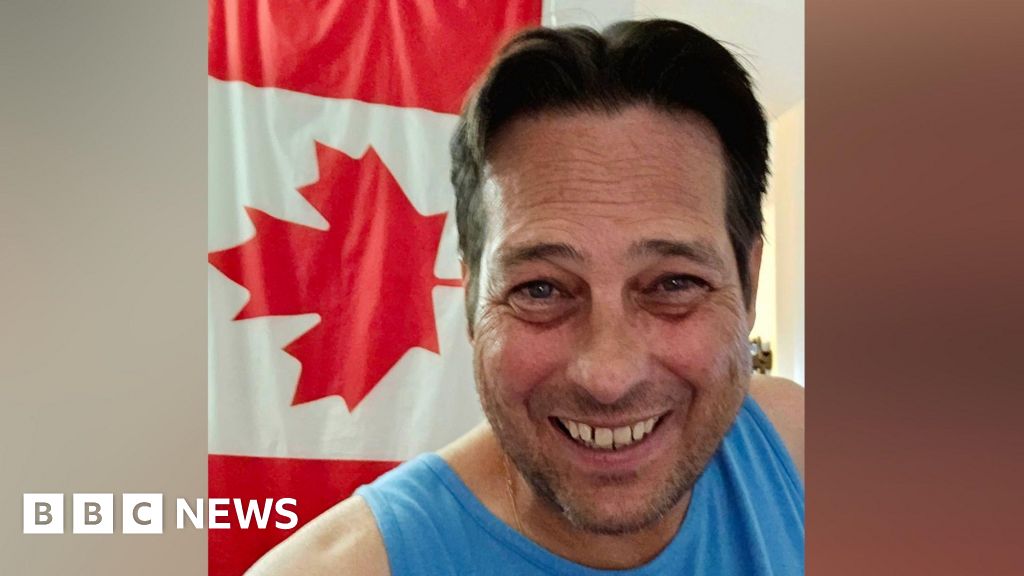
Some 'Lost Canadians' Told to Surrender New Citizenship Certificates
A number of individuals who recently received Canadian citizenship certificates are now being asked to return them as their cases undergo further review, leading to disappointment and confusion.
A group of Americans who recently obtained proof of Canadian citizenship is facing requests from the Canadian immigration ministry to return their new citizenship certificates for further review. This situation has led to confusion and disappointment among those affected, as well as their legal representatives.
The immigration ministry sent letters to an unspecified number of individuals, indicating that recipients 'may not be entitled' to their citizenship certificates and requesting their return. These letters were sent to people who obtained citizenship through an ancestral connection to Canada under a law that was enacted in December.
An immigration ministry spokesperson confirmed in a statement to the BBC that 'a limited number of files' are currently under review. The review pertains to the processing of individual cases, and those who received the surrender letters will have the opportunity to submit additional evidence to support their claims to citizenship.
'If the review confirms that the individual is entitled to the certificate, it will be returned,' the spokesperson stated.
One affected individual, Shawn Davis Mooney, moved permanently from California to Victoria, British Columbia, with his husband and expressed alarm upon receiving the letter. 'It has devastated me beyond imagination,' he remarked.
Mooney applied for Canadian citizenship following the introduction of the 'Lost Canadians' law late last year. With assistance from a lawyer, he submitted a comprehensive 114-page application demonstrating that a great-great-grandparent was born in New Brunswick. He received urgent processing and was granted a citizenship certificate in February, but now he is left uncertain about his status in Canada. 'I had to read (the letter) three times,' he said. 'I couldn't understand it.'
The letter, signed by the Registrar of Canadian Citizenship, Peggy Sun, stated that Mooney's citizenship certificate might be revoked due to insufficient documentation. Mooney expressed confusion, asserting that his application was thorough and that the situation is making him and his lawyers feel as though they have committed fraud. 'The worst part is it's making us feel like frauds, or we've done something wrong,' he said.
The letter also indicated that Mooney's citizenship status is currently under review. Similar letters have been shared online and with the BBC by other recipients.
Rana Charron, a resident of Cleveland, Ohio, also applied for Canadian citizenship, using census records to establish that her great-great-grandmother was French-Canadian from Quebec, as no birth or baptismal records were available. After her application was approved, she received her citizenship certificate earlier this month but is now preparing to return it. 'I was very excited to be formally Canadian,' she shared. 'Growing up, my family was very aware of our Canadian heritage... it mattered a lot to me.'
Charron described being asked to surrender her citizenship certificate as 'one of the largest disappointments I've had in my life.'
Montreal immigration lawyer Lisa Middlemiss found the letters 'shocking,' noting that citizenship revocation is typically rare. She emphasized that those receiving the surrender letters had already navigated the proper legal procedures as set out by Canadian immigration laws. 'It sends such a bad message for Canada,' she remarked.
In the initial month and a half following the enactment of the 'Lost Canadians' law, Canada received over 12,000 applications for citizenship. Most approvals were granted to individuals born in the United States, with the next highest approval rates for applicants from Mexico and the UK. Currently, data on denied applications is not publicly accessible.
The immigration ministry asserted that each application was reviewed by trained officials prior to granting certificates. However, it also indicated a review of affected files is underway 'to ensure they are assessed fairly, consistently and in accordance with the law.'
Charron stated that despite the situation, she intends to pursue her case but has grown distrustful of Canada's citizenship processes. 'If they can just yank that back, what's going to stop them from doing it two years from now, or 10 years from now, when people have really settled down and put roots?'