The Tartan Army's visit to Boston has turned into a cultural celebration, marked by a haggis controversy and a warm embrace from locals, as Scotland fans revel in their World Cup experience.
This week, a controversy surrounding haggis emerged when a video featuring Massachusetts Governor Maura Healey circulated on social media. In the video, Healey signed a declaration that declared the Scottish dish legal in Massachusetts. This proclamation seemed to indicate that the Tartan Army's mission in Boston extended beyond enjoying local beer and participating in baseball games; it appeared to include the liberation of haggis, which has been banned in the U.S. for 55 years.
However, just a day later, Governor Healey clarified the situation via her Instagram account, stating, "I have received countless messages from Massachusetts residents, Scotland supporters, legal experts, and at least one very concerned sheep. After careful review by my office, I am prepared to clarify that this was, in fact, a joke." This revelation prompted a humorous response from fans, questioning the purpose of their trip.
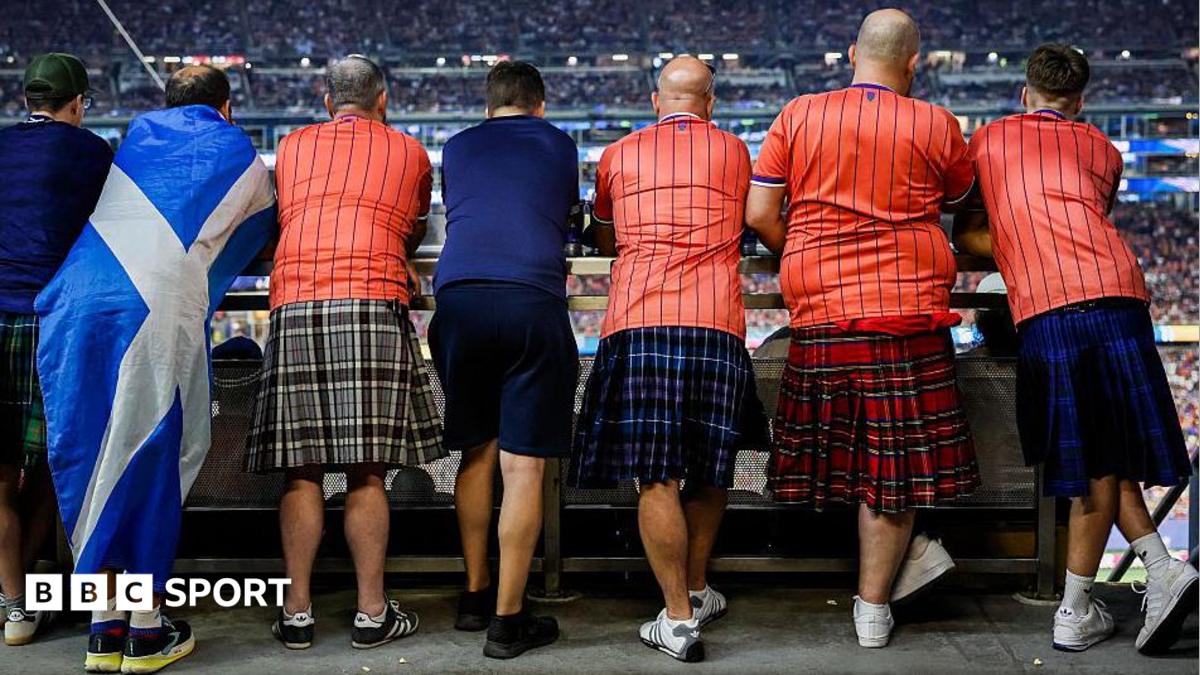
Despite the haggis debacle, Scotland's supporters made a significant impact on Boston, with locals warmly welcoming them during their time in the city. The presence of Scottish fans was undeniable, as traffic cones adorned statues and kilt sightings became commonplace on city sidewalks.
A highlight of the Tartan Army's visit was their takeover of Fenway Park on Sunday night, where the Boston Red Sox faced the Texas Rangers. The celebratory atmosphere was palpable, with 10,000 Scots singing about John McGinn, and Sox fans finding their views obstructed by fans performing the Gay Gordons dance. Additionally, organist Josh Kantor entertained the crowd while displaying a sign reading "No Scotland No Party." One lucky Scot even won the 50/50 draw jackpot that night.
Two days later, thousands of Scottish fans returned to Fenway for Pride Night, as the Toronto Blue Jays played in Boston. There are discussions of even larger gatherings planned for the Miami Marlins game in South Florida next week.
The connection between the two cultures has transcended baseball, with Boston Mayor Michelle Wu announcing a sister city application with Glasgow while wearing a Scotland football jersey in a Scottish pub. This cultural exchange has been characterized by the joyful behavior of the Tartan Army, with no arrests reported among Scotland fans in Boston or nearby Providence.
The groundwork for this celebration was laid two years prior during the European Championships in Bavaria, where many Scots gathered in Marienplatz, demonstrating their generosity and camaraderie. However, the football experience then was marred by poor performance, unlike the current World Cup, which has seen Scotland competing for the first time in 28 years.
As of now, the mood among the Tartan Army remains high, especially following a successful opening match against Haiti. A draw against Morocco could further elevate the celebratory atmosphere in Boston, potentially leading to unprecedented celebrations.
For many young fans, this trip has been a once-in-a-lifetime experience, with an awareness that it may be decades before Scotland qualifies for another World Cup. Regardless of the outcome in Miami, the memories created in Boston are irreplaceable.
For nearly a week, Scotland's presence has dominated the city, creating a rich tapestry of cultural exchange along the Charles River. As the Tartan Army prepares to return home and pack their sporrans, questions arise about the legacy they will leave behind in Boston. Will it be their generosity, their spirited engagement, or simply raising awareness about the World Cup? Perhaps it will be a combination of all these factors, but certainly, it will not include a haggis supper.