Rivian Faces Lawsuit Over Allegations of Misleading Self-Driving Claims
Rivian is being sued for allegedly making false claims about the autonomous driving capabilities of its R1T and R1S models, with a class action filed in California.
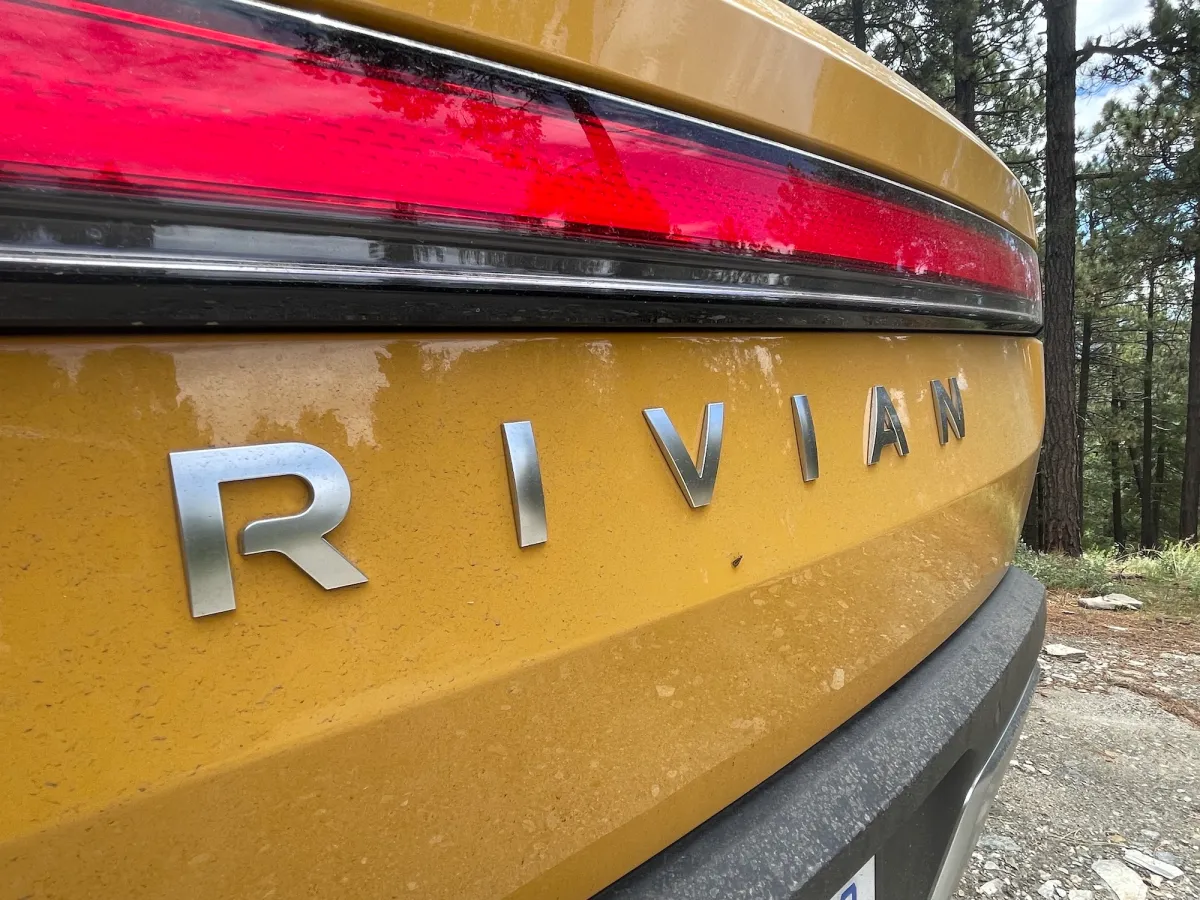
Rivian, an electric vehicle manufacturer, is currently facing a lawsuit that accuses the company of making misleading statements regarding the autonomous driving features of its R1T truck and R1S SUV models. The class action lawsuit was submitted on Wednesday in the U.S. District Court for the Central District of California, specifically targeting the first-generation versions of these vehicles.
The complaint asserts that Rivian claimed its flagship models would support hands-free driving, a feature categorized as Level 3 autonomy by the Society of Automobile Engineers (SAE). This classification indicates that the vehicle can manage steering, acceleration, and braking without requiring the driver to keep their hands on the wheel or eyes on the road under certain conditions, such as on highways or at low speeds. However, it is important to note that even with Level 3 autonomy, drivers must remain alert and ready to take control when necessary.
According to the lawsuit, Rivian has made false promises over a period of five years through a comprehensive national marketing campaign, assuring consumers that its driver assistance system, known as Driver+, would become standard in all its vehicles. The complaint highlights instances such as Rivian CEO RJ Scaringe’s remarks at TechCrunch Disrupt 2022, where he allegedly discussed the company's aspirations for autonomous driving.
The complaint states, 'No software update — no matter how sophisticated — will enable its Gen 1 Vehicles to perform as advertised.' It further claims that Rivian was aware that its first-generation vehicles would never achieve Level 3 autonomy or 'true hands-free driving,' yet continued to promote these capabilities to encourage consumer purchases.
Rivian has opted not to comment on the lawsuit, citing ongoing legal proceedings. The lawsuit includes three named plaintiffs and accuses Rivian of fraud, negligent misrepresentation, and unjust enrichment. The plaintiffs are represented by Coleman Law and Tycko & Zavareei, who have requested a jury trial.
This legal action is not the first for Rivian; the company previously settled a class action lawsuit last year, agreeing to pay $250 million after facing backlash for abruptly raising prices on its R1 pickup truck and SUV in 2022.
Currently, Rivian’s first-generation R1T and R1S vehicles do not feature hands-free driving capabilities. However, the company has introduced second-generation models in 2024 that do include this functionality. Though the exterior design of the second-generation vehicles appears similar, Rivian has made significant internal upgrades, including improvements to the battery pack, suspension system, electrical architecture, interior seating, and sensor array.
The revamped second-generation R1 vehicles come equipped with the 'Rivian Autonomy Platform,' which includes 11 cameras, five radar sensors, and a computer system that is ten times more powerful than its predecessor, as reported by TechCrunch.
The advanced driver assistance systems in these new models initially feature adaptive cruise control, maintaining speed and distance from other vehicles on highways, and a highway assist function that automatically manages steering, braking, and acceleration on select highways.

In the previous year, Rivian also began rolling out 'Universal Hands-Free' driving through a software update for its second-generation R1 vehicles. This feature allows drivers to remove their hands from the wheel on over 3.5 million miles of roads throughout the U.S. and Canada, provided there are visible lane markings.
Rivian is not alone in facing legal scrutiny over claims regarding self-driving capabilities. Tesla and its CEO Elon Musk have also been involved in lawsuits regarding their Full Self-Driving software, with some owners alleging the company failed to deliver on promises of fully autonomous vehicles.
Tesla has faced regulatory investigations concerning its marketing practices related to the capabilities of its Autopilot and Full Self-Driving systems. The California Department of Motor Vehicles accused Tesla of violating state law through deceptive marketing of these systems. Although a judge ruled in favor of the DMV, the agency decided in February not to suspend Tesla's sales and manufacturing licenses, choosing instead to forgo a 30-day penalty after Tesla ceased using the term 'Autopilot' in its marketing efforts in California.
This article was initially published at 11 am PT.