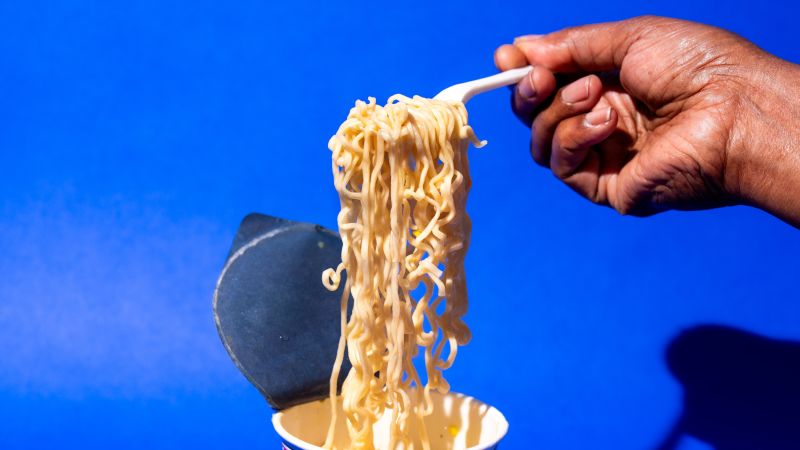
Instant noodles, once a post-war solution in Japan, have become a global phenomenon, with a projected industry growth to $98 billion by 2032, despite their health risks.
Instant noodles have garnered a reputation as an unhealthy food choice; however, their popularity shows no signs of waning. The global market for instant noodles is expected to reach $98 billion by 2032, a significant increase from the current valuation of approximately $64.67 billion by 2025.
The invention of instant noodles dates back to 1958 when Momofuku Ando created them in a wooden shed in Osaka, Japan, as a response to the food shortages in the post-war era. Today, the world consumes about 123 billion servings of instant noodles each year, with Vietnam leading the way at 81 servings per person annually.
The appeal of instant noodles lies in their unique position as both a guilty pleasure and a dietary staple for many. Despite various studies linking instant noodles to health risks such as dementia and heart disease, their consumer base continues to grow. A food scientist even declined to participate in a discussion about them, concerned that their insights could inadvertently promote the product's popularity.
The global demand for instant noodles is attributed to their addictive qualities. Researchers have noted that their high energy density and hyperpalatability—characterized by a mix of salt, sugar, fat, and carbohydrates—contribute to their irresistible nature. Manufacturers, on the other hand, highlight that the noodles meet essential consumer desires for taste, convenience, shelf life, affordability, and safety, as emphasized by a representative from Nissin Foods Group.
Ando's journey began in the 1950s when he aimed to create a food that would address the severe food shortages in Japan. After several months of experimentation, he had a breakthrough while observing the frying of tempura, which led him to develop a method of flash-frying noodles. This process allowed for the creation of instant noodles, which could be rehydrated quickly in hot water. His first product, named 'Chikin Ramen,' marked the inception of the instant noodle phenomenon.
In 1971, Nissin launched its first cup noodles, packaged in disposable containers for convenience. The brand quickly expanded, opening its first overseas factory in Pennsylvania just two years later. Currently, China stands as the largest consumer of instant noodles, with an annual consumption of approximately 43.8 billion packs, followed by Indonesia at 14.7 billion and India at 8.3 billion. In terms of per capita consumption, Vietnam maintains the highest rate, with South Korea and Thailand following closely behind.
The World Instant Noodles Association (WINA) notes that Vietnam's culinary culture has long embraced noodles, and as the economy grows, there is an increasing demand for convenient meal options. The market in Vietnam is shifting toward mid- to high-priced products that offer added convenience, reflecting a broader trend in consumer preferences.
In the United States, the instant noodle market continues to thrive, reaching 5.15 billion servings in 2024, making it the sixth-largest market globally. The demand for Asian-inspired flavors, particularly spicy varieties, has contributed to this growth. WINA reports that while classic chicken flavor remains popular, there is a growing diversity in product offerings, including beef, shrimp, and vegetable-based options.
David Lai, a chef at Neighborhood, a restaurant ranked 24th on the 2026 Asia’s 50 Best Restaurants list, has embraced instant noodles as a legitimate ingredient. He believes that instant noodles can serve as comfort food and are accessible to everyone. Lai is collaborating with Nongshim, a South Korean noodle manufacturer, to create a signature flavor, seeing instant noodles as versatile and worthy of culinary exploration.
In Japan, Nissin is also innovating beyond traditional flavor profiles. The company is investing in food technology, particularly its Kanzen Meshi (Complete Nutrition) line, which aims to incorporate essential nutrients into instant noodles. Their goal is to change public perceptions of instant noodles by emphasizing their potential for both great taste and health benefits.
Despite differing views on the health aspects of instant noodles, both chefs and manufacturers share a deep respect for the product's history and cultural significance. Nissin continues to operate under Ando's founding principles, which emphasize food security and societal benefit.
As of May 2026, WINA members have provided around eight million instant noodles as part of disaster relief efforts, highlighting the product's role as a quick and comforting meal option in times of need. Instant noodles remain a source of emotional and physical comfort for many, fulfilling a basic need for accessible nourishment.
In a fast-paced world filled with choices, instant noodles—whether flavored with masala in India or churrasco in Brazil—represent a reliable and cherished meal option. Nissin encapsulates this sentiment by stating that enduring brands belong not to the company but to the collective memories and experiences of their consumers.