Fans from the US, Canada, and Mexico are investing significantly in World Cup experiences, revealing the financial strain and emotional value associated with attending the tournament.
Attending the World Cup is considered a unique and invaluable experience for numerous fans, yet the associated costs can be staggering. Expenses from match tickets, travel, accommodations, and even food within the stadium can accumulate rapidly.
Five days into the tournament, football enthusiasts in the host countries—Mexico, Canada, and the US—shared their spending experiences with the BBC, highlighting the financial implications of attending the World Cup.
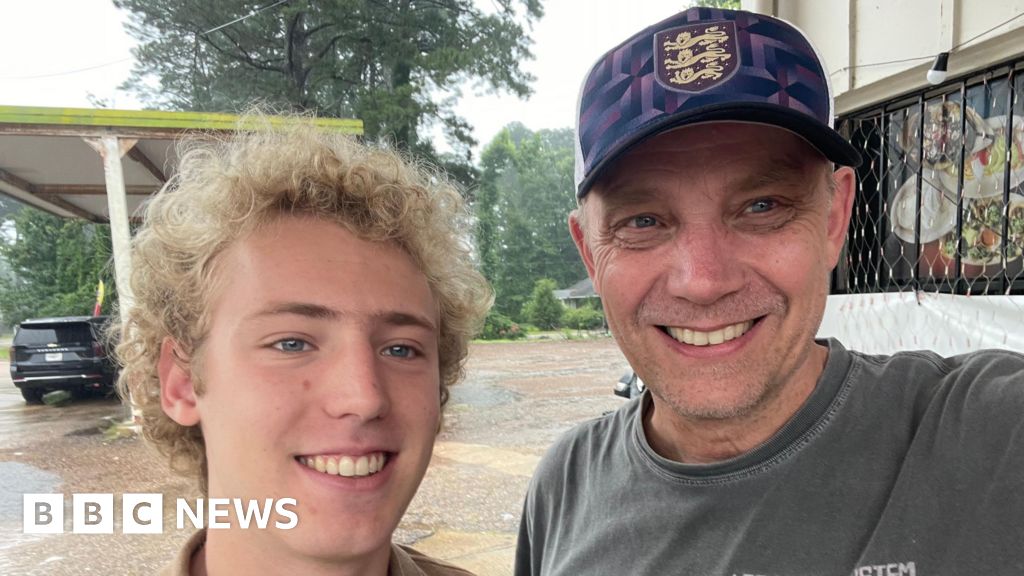
Morten Oftedal, a Norwegian residing in Atlanta, Georgia, emphasized the significance of this event for his family. He is keenly aware that this summer may be his 82-year-old father's only opportunity to watch Norway play in the World Cup, as the team qualified for the first time in nearly three decades. Oftedal expressed, 'I've been a huge soccer fan my whole life, and it's mostly due to dad. I can't say, 'no, let's do it next time, or somewhere else.' So, we're very excited.'
However, the financial burden was a concern for Oftedal. He purchased three tickets for the Norway vs. Iraq match in Massachusetts at a price of $380 (£282) each. Additionally, he redeemed 180,000 frequent flyer points for round-trip flights from Atlanta to Boston for three passengers. The transportation to the stadium would cost $80 round trip per individual. Altogether, Oftedal anticipates spending approximately $3,600 in cash and points for himself, his father, and his wife to attend a single match, a figure he described as 'insane.'
'It's not really for individuals; I feel like it's for corporate America,' he remarked in reference to the 2026 tournament.
Others shared similar sentiments about the expenses of attending the tournament, with many indicating their costs reached into the low thousands. Despite the financial strain, their passion for football and the memories they hoped to create helped mitigate the impact of the spending.
Iain Bagwell, a 58-year-old Brit living in Atlanta, mentioned spending about $1,200 for each of his category 2 tickets to see England play Croatia in Dallas, Texas. Although he initially felt the pricing was akin to 'daylight robbery,' he later concluded that given the circumstances and FIFA's handling of the situation, the deal wasn't as bad as it seemed.
Bagwell and his son planned to camp during their road trip to Dallas, combining enjoyment and cost-saving measures. Following the England match, they intended to drive to Kansas City to watch Tunisia take on the Netherlands for $235 per ticket.
Many American fans have adapted to the high costs associated with sporting events. For instance, the cheapest ticket for the recent NBA finals to see the New York Knicks at Madison Square Garden was approximately $3,500.
International fans found the expenses related to attending the 2026 World Cup to be surprising. Alisa and Admir Maric acknowledged that their trip to Toronto was costly but deemed it worthwhile. They secured tickets to watch Bosnia and Herzegovina compete against Canada at a price of CAD$1,250 (US$890; £665) each for third-row seats. Their total expenses included about $600 per night for the hotel and $1,150 per person for flights, bringing their trip's total to approximately CAD$5,400.
Sisters Aida and Emina Tucic, also fans of Bosnia and Herzegovina, traveled from Hamilton, a city near Toronto. They expressed excitement about attending the game immediately after Bosnia's qualification, despite initial hesitance regarding rising ticket prices. They purchased their tickets three days prior to the game at CAD$1,200 each. Emina offered advice to fellow travelers, suggesting they explore local social media for budget-friendly dining options.
When asked about the fairness of the ticket prices relative to the experience, Aida responded, 'probably not,' advocating for football to be more accessible to fans. Nevertheless, she acknowledged the priceless nature of the experience.
'It's once-in-a-lifetime,' Emina added. 'Both the countries you love, one where you were raised, one where you were born—getting to see them both play on the world stage is amazing.'
In Mexico City, some locals experienced the World Cup atmosphere through informal matches between pedestrians and police officers, as ticket prices for the official games were prohibitive for many, given that around 30% of the population lives in poverty.
Outside the Azteca Stadium during the opening match against South Africa, fans reported paying between USD$1,500 and $4,000 for tickets. Aaron Vieyra, a member of the Mexican national team supporters group Furia Azteca, shared that he paid 30,000 pesos ($1,750; £1,300) for two tickets through a contact. He noted that one ticket's cost was equivalent to three months' rent for many in Mexico City. Having previously attended World Cups in Brazil and Russia, he remarked that he spent more on a single game in Mexico than the combined cost of all the matches he watched in those tournaments.
Vieyra expressed mixed feelings about whether it was worth the money, stating, 'It was worth it, but only just.' He acknowledged that his situation was manageable since he did not incur additional costs for flights or accommodation. Had he needed to pay for those as well, he would not have spent that much on a ticket.
Prices for food and beverages within the stadiums vary but are comparable to those found at major venues in the US. An investigation by The Athletic indicated that fans might pay $16 for a 16-ounce beer at the New York New Jersey Stadium, which is set to host the final, while water costs around $5 for a 20-ounce bottle. Conversely, at the Mercedes-Benz Stadium in Atlanta, a small (12-ounce) beer costs $5, a large (20-ounce) beer is priced at $9, and water is available for $3.
Other expenses have also seen significant markups. For instance, a train ticket from New York City's Penn Station to the NYNJ Stadium for a World Cup match is priced at $98, compared to the usual fare of $12.90. New Jersey Governor Mikie Sherrill indicated that the price hike was to prevent local residents from bearing the burden of fan transportation costs, mentioning that FIFA is not contributing to the $48 million transit expenses.
Local officials have been attempting to negotiate with FIFA to reduce costs for average fans. New York City Mayor Zohran Mamdani has worked to secure 1,000 tickets priced at $50 for residents through a lottery system. Additionally, the Canadian province of Ontario enacted the Putting Fans First Act to limit resale prices, and Dallas is offering free transportation to its stadium.
Despite the prevalent discussions surrounding ticket prices, the fans who spoke to the BBC remained enthusiastic about the tournament and felt the costs were justified. Oftedal, the Norwegian supporter, emphasized that creating memories with his father was the most important aspect of the experience, noting that the financial concerns tend to fade over time.