
Challenges Facing Trump's Efforts to Clean the Lincoln Memorial Reflecting Pool
President Trump's initiative to turn the Lincoln Memorial Reflecting Pool blue for July 4 faces significant challenges due to persistent algae growth.
In recent weeks, President Donald Trump has been engaged in a challenging battle against an unexpected adversary: algae. This struggle is part of his broader initiative to enhance the aesthetic appeal of Washington, D.C., in anticipation of the nation's 250th anniversary. His specific goal was to transform the Lincoln Memorial Reflecting Pool into an 'American Flag blue' for the July 4 celebrations. To achieve this, the pool, which holds 6.5 million gallons of water, was drained, coated with a blue lining, and refilled at a cost exceeding $16 million.
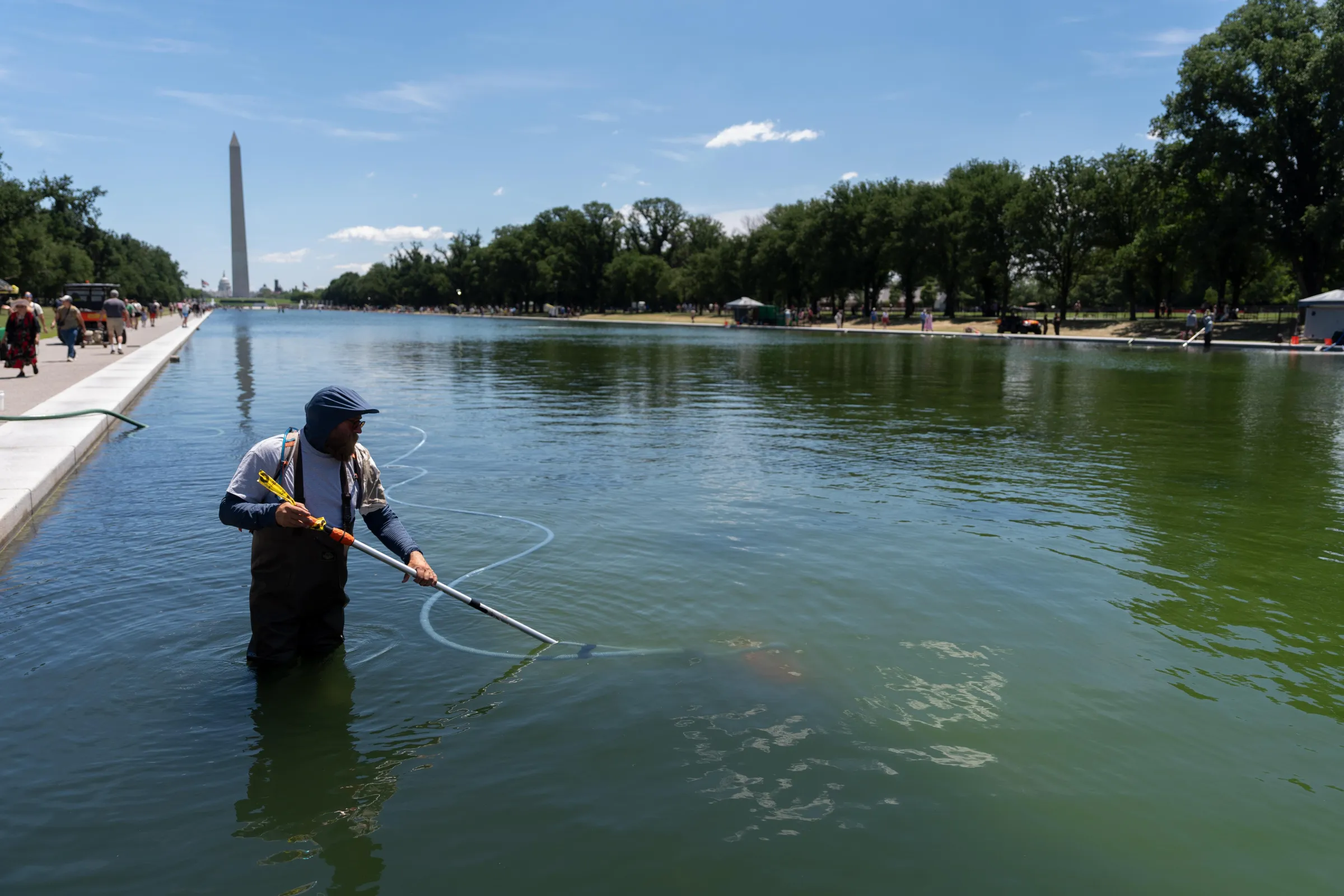
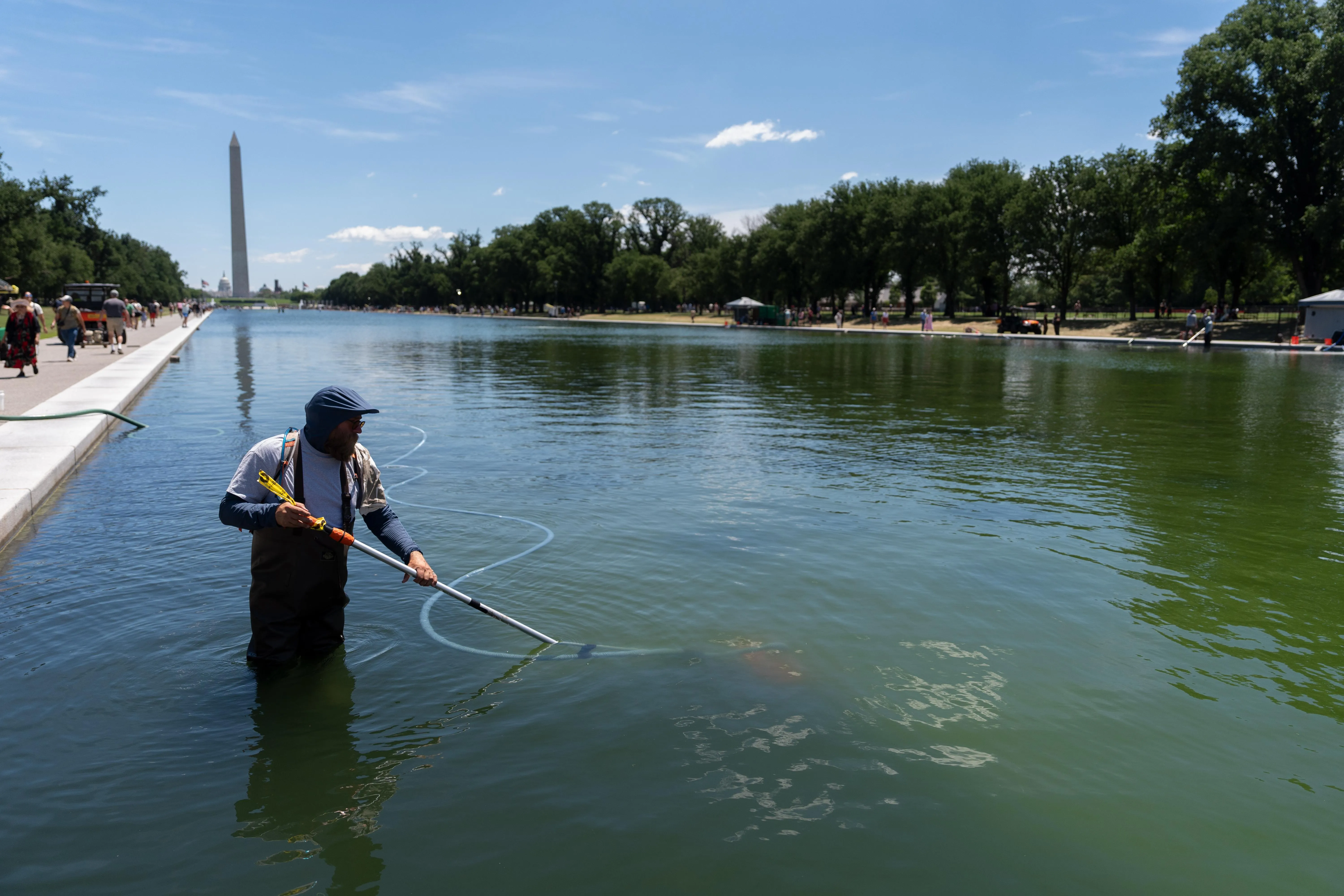
However, shortly after the pool was refilled earlier this month, it became evident that the algae had begun to thrive, resulting in a greenish hue that obscured the intended blue appearance. The blue liner has started to peel, and despite federal workers introducing hydrogen peroxide into the water in an attempt to combat the algae, the bloom has persisted.
Experts express skepticism about the possibility of completely eradicating the algae from the pool by July 4. They warn that even if the water appears clearer in the short term, it is likely that algae will return. Algae, often referred to as pond scum, are plant-like organisms that harness sunlight for energy. Some algae, like kelp or seaweed, are large, while others are microscopic, such as the common varieties of green algae identified in the reflecting pool, including Desmodesmus and Scenedesmus.
The rapid growth of algae is concerning; a single cell can divide multiple times a day, leading to exponential population increases. Jim Elser, an ecologist from the University of Montana who specializes in algae, noted that under optimal conditions, a waterbody can transition from clear to murky within just 24 hours. For algae to thrive, several conditions must be met, including sunlight, carbon dioxide, warmth, and essential nutrients.
The Lincoln Memorial Reflecting Pool, which spans approximately the size of six NFL football fields and is relatively shallow, provides an ideal environment for algae. With summer temperatures reaching the 80s and 90s Fahrenheit, the conditions are ripe for algae growth. Nutrients, particularly phosphorus and nitrogen—which are commonly found in fertilizers—are also crucial for algae proliferation. Reports indicate that the water used to refill the pool is rich in these nutrients.
Typically, the pool is replenished with water from the Tidal Basin, a reservoir linked to the Potomac River. However, when that water is too murky, officials resort to using DC Water, the municipal water supply. After the renovation, this was the approach taken, as confirmed by a spokesperson from the Department of the Interior. Unfortunately, even municipal water can contain nutrient-laden elements. Ashley Bair, a senior research developer at Usalco, explained that DC Water adds phosphorus to prevent lead and other heavy metals from leaching from old pipes into the drinking water, which can inadvertently contribute to algal blooms.
Moreover, the pool's urban surroundings contribute additional nutrients. Located in a city frequented by wildlife such as geese and ducks, their droppings can further enrich the water. Rain can wash fertilizers and feces into the pool, exacerbating the nutrient issue, as noted by Ana 'Mindy' Morales, an algae researcher at the University of Vermont.
While cleaning the Reflecting Pool is feasible, the current filtration and treatment systems are not fully effective. They often do not operate continuously and fail to filter out the nutrients that are fueling the algae bloom. The Trump administration has utilized methods such as hydrogen peroxide and a technology called nanobubbles to combat the algae, but these approaches do not address the underlying issue of nutrient overload.
To prevent future algae blooms and maintain a clean pool, it is essential to remove nutrients from the incoming water. Elser emphasized that addressing the source of the problem is crucial, rather than merely treating the symptoms. Bair expressed confidence that she could effectively manage the algae by removing nutrients during water intake, applying chemical treatments, and conducting ongoing monitoring of nutrient levels, which could potentially be achieved by July 4.
On the other hand, Alan Wilson, an algal bloom expert from Auburn University, proposed an alternative solution involving the introduction of organisms that consume algae, such as zooplankton. He noted that this approach would take longer but could effectively manage algae populations. Additionally, while snails that consume algae were considered, they would only address algae on the bottom and sides, not the floating blooms.
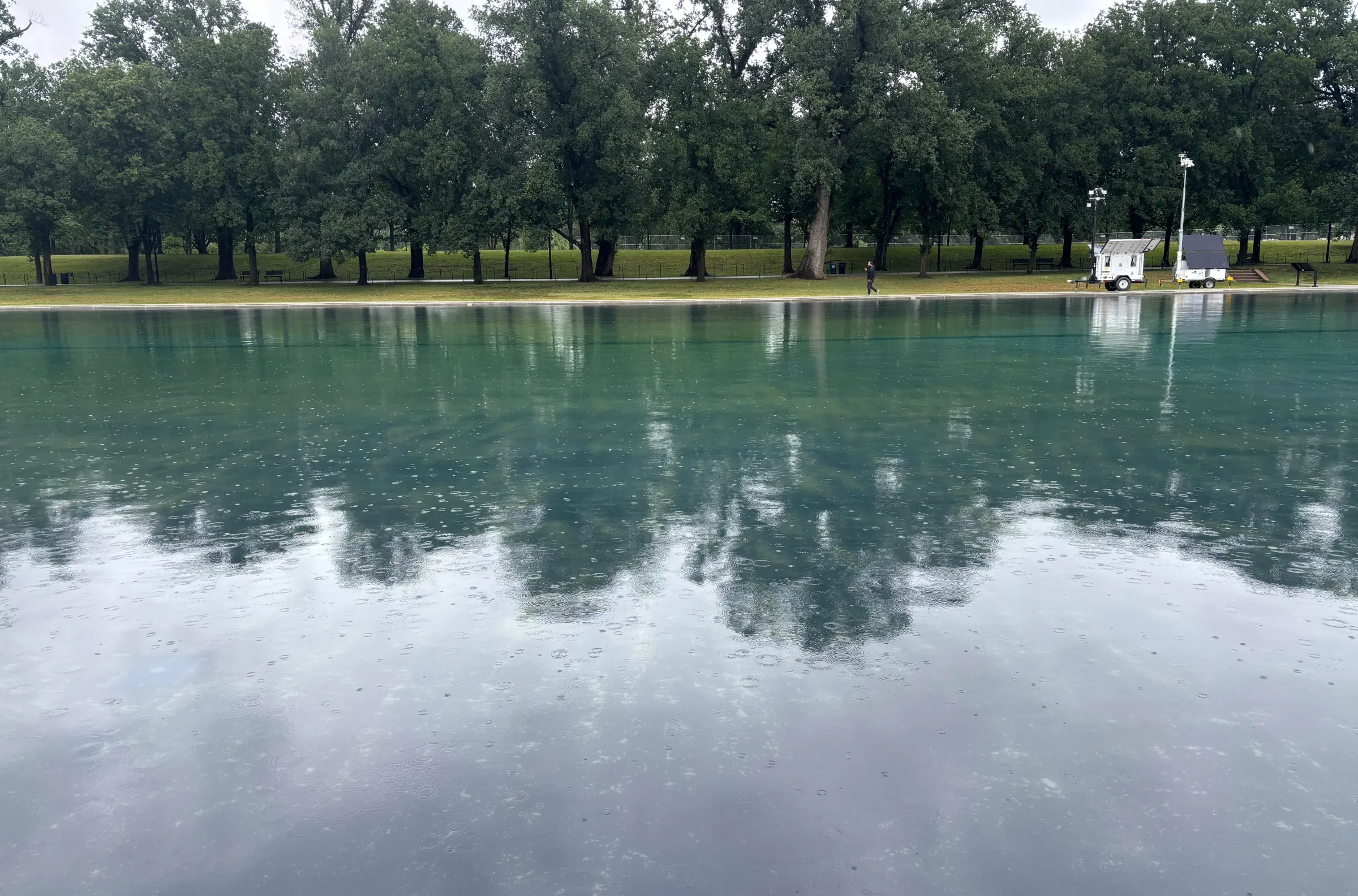
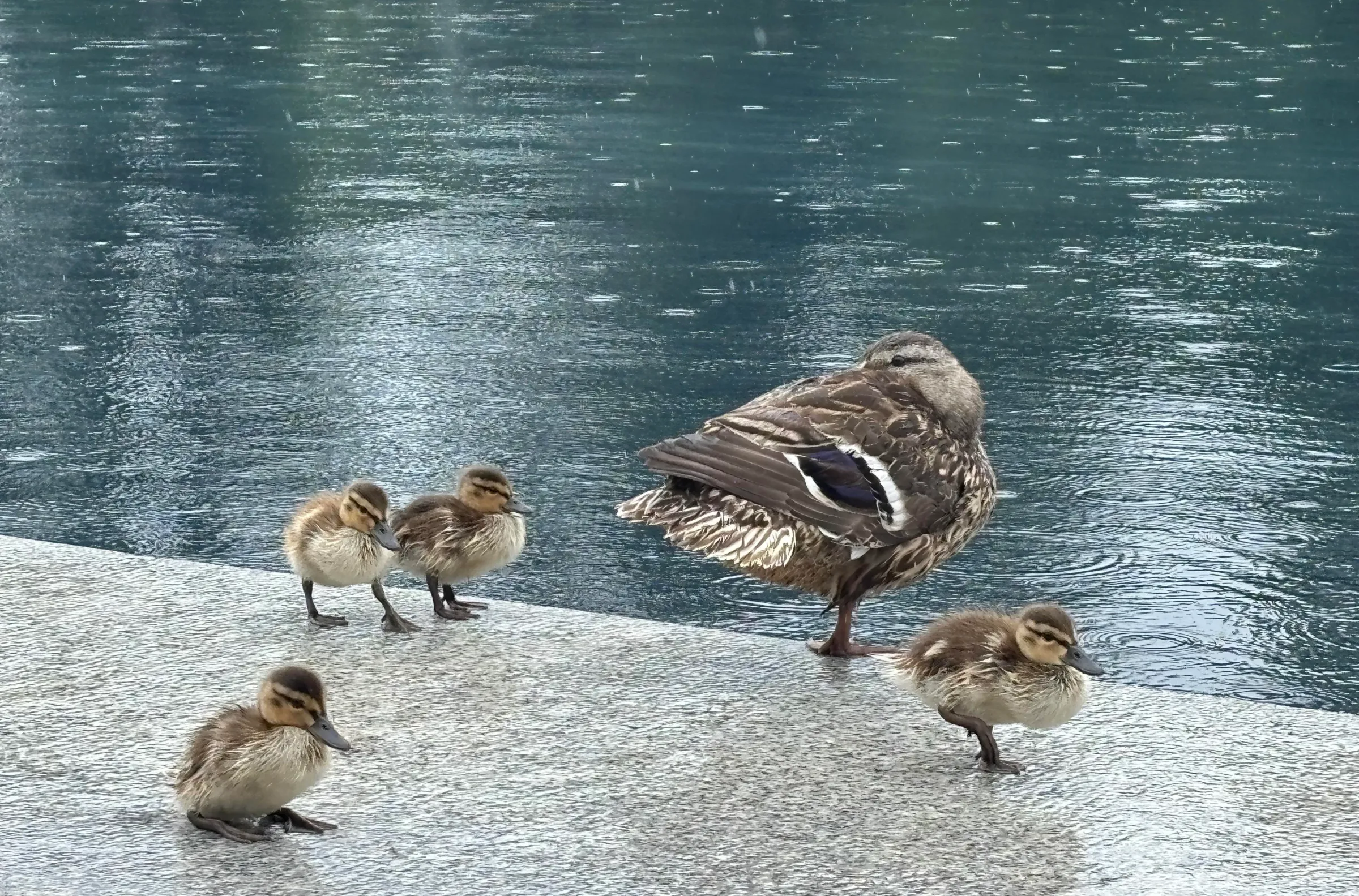
As of June 23, the Reflecting Pool still exhibited a greenish tint, although reports indicated that the color might be fading. Observers noted the presence of ducks near the pool, and some individuals expressed a preference for the more natural appearance of the water. Elser remarked, 'My feeling is that water with algae in it reflects the Washington Monument just as well as water without algae.' He concluded that a green pool can still provide a reflection of the iconic monument.